
Understand Moving Quote Types Before You Start Calling Movers
Learn how binding and non‑binding quotes, hourly and flat‑rate bids, in‑home, virtual, and AI-based estimates actually work—and how one AI home scan on MoveCost.ai can power all of them from a single, accurate inventory.
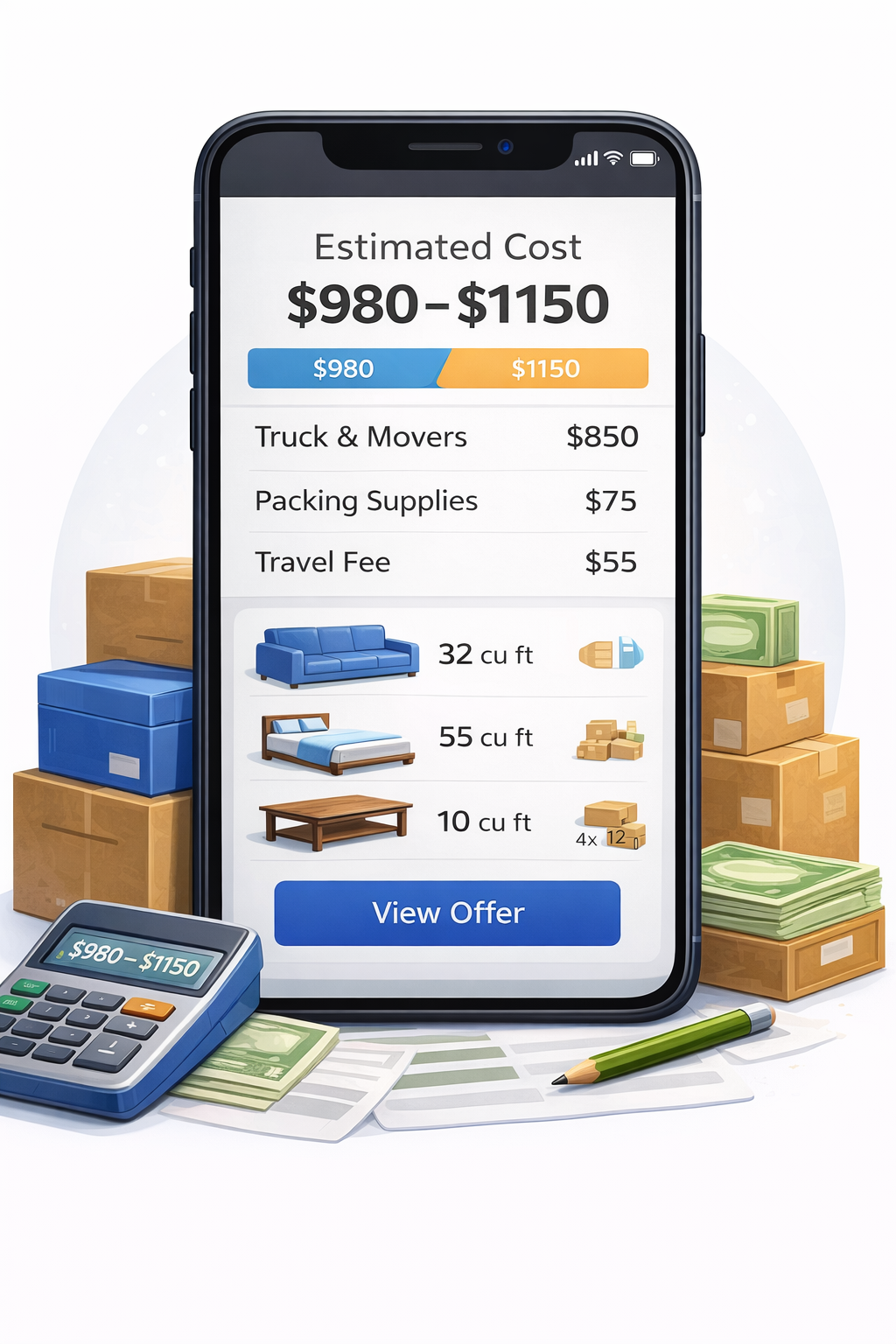
Types of Moving Quotes & How AI Scanning Makes Them More Accurate | MoveCost.ai
The Main Types of Moving Quotes and Estimates You’ll See
Most offers are built from the same ingredients, just assembled in different ways. You’ll hear movers and websites talk about quotes, estimates, binding, non‑binding, hourly, flat‑rate, in‑home, virtual, and now AI‑based processes. Underneath the labels, they’re all trying to answer the same question: how much work is this move, and what will it cost? Here are the core types you’ll see most often: • Non‑binding estimate • A mover’s best guess based on what you tell or show them. • Final price can go up or down once volume/weight and access are confirmed. • Common when the information is incomplete or given only over the phone. • Binding estimate • A written agreement that the price will not exceed a specific amount as long as inventory and conditions match what’s listed. • Changes if you add items, change addresses, or access gets harder (for example, an elevator outage). • More common on long‑distance moves when there’s a detailed inventory. • Hourly quote (local moves) • Price is based on crew size × hours, plus any travel or minimums. • The mover estimates time from your inventory and building notes; the final bill follows the clock. • Typical for short, in‑metro moves. • Flat‑rate or not‑to‑exceed quote • One number for the job, often built from your inventory and route. • May be structured as a binding or “not‑to‑exceed” estimate if contract terms support it. • Helpful when you want predictability, but you should understand what’s included. • In‑home estimate • A representative walks through your home to build an inventory and estimate. • Often used for larger or complex moves. • More accurate than a rough phone guess, but requires scheduling. • Virtual/video estimate • Similar to in‑home, but done over video chat. • You show each room; the mover records items and access conditions. • Accuracy depends on how carefully both sides capture details. • AI‑based inventory and estimate • You walk through your home with your phone; AI recognizes furniture and boxes and creates a structured inventory. • That inventory can be used to generate non‑binding ranges, feed into binding or flat‑rate negotiations, and power hourly or distance‑based quotes from multiple movers. • This is the approach MoveCost is built around. The sections below show how these quote types differ in practice, and how a single AI inventory can sit in the middle so you’re not re‑explaining your move from scratch every time.
Binding vs Non‑Binding vs Hourly vs Flat‑Rate
Different formats, same underlying job: your inventory and access. This table shows how the most common quote types compare when they’re all using the same AI‑built inventory of your home.
In‑Home, Virtual, Phone‑Only and AI‑Based: How Quote Processes Differ
The best process is the one that captures your move accurately with the least friction for you. You can reach the same quote format (for example, a binding or hourly estimate) via different processes. Understanding the trade‑offs helps you choose how to start. • Phone‑only / short online form • You describe your home by memory or answer a handful of questions. • Fastest to start; easiest to get wrong. • Most likely to miss storage, balconies, garages, and tricky access. • In‑home walkthrough • Someone visits your home and records items and access conditions. • Can be very accurate if done carefully. • Requires schedule alignment and comfort with an in‑person visit. • Virtual or video estimate • Similar to in‑home but done over video chat. • Accuracy depends on your camera work and what the rep asks to see. • Better than a phone guess when you have unusual layouts or access. • AI‑based scan (MoveCost) • You walk your phone through each room; AI flags major items and builds a digital inventory. • Captures what a human would see in an in‑home visit, but on your schedule and reusable across many tools. • Can be combined with a short follow‑up call or video if a mover needs to verify special items. MoveCost is built to make AI scanning your default first step: 1. You create a single, accurate inventory. 2. You can still choose to do a virtual or in‑home walkthrough for certain movers if you want binding or highly customized quotes. 3. You reuse that inventory in calculators, estimate guides, quote/compare hubs, and city/route pages without rebuilding it from scratch.
Why a Single AI Inventory Makes Every Quote Type Fairer
The biggest source of confusion isn’t the quote label—it’s inconsistent information. Most people who feel “burned” by moving quotes ran into one of these problems: • Each mover heard a slightly different version of the move. • Important details like stairs, elevators, loading docks, parking, or storage units were left out for some movers but not others. • The inventory changed along the way, and no one updated it. Using AI scanning as your first step solves much of this: • You create one detailed, visual inventory of what’s moving. • You add access notes once (stairs, elevator, parking, long carries). • Every calculator, guide, and mover you choose to engage sees the same baseline information. That has two big benefits: 1. Quotes become more comparable. If Mover A and Mover B both see the same items and routes, differences in their numbers say more about their approach and pricing than about missing information. 2. Upfront conversations improve. When a mover proposes a binding, non‑binding, hourly, or flat‑rate option, everyone can refer back to the same inventory to decide whether the scope is locked in or needs changes. You don’t have to become an expert in every quote type. You just need one accurate representation of your move that can feed any format. That’s the role of the AI inventory in the MoveCost ecosystem.
How One Move Can Produce Very Different Experiences Depending on Quote Type
The goal is to pick the process that matches your comfort level, not to collect as many random numbers as possible. Imagine you’re moving a typical 2‑bedroom apartment: living room set, two beds, dressers, a desk, TV, kitchen items, and 30–40 boxes. With one AI scan, you now have a structured inventory. Here’s how three different processes might play out using that same data: Path A – Quick phone quotes without inventory • You call three movers and describe your place from memory. • One hears “small 2BR,” another hears “large 1BR,” and the third takes almost no notes. • All three give ranges, but none agree, and none explicitly mention how many hours they’ve budgeted for stairs or long hallways. Path B – AI inventory + non‑binding estimates • You scan once with MoveCost. • Three movers review the same room‑by‑room item list and access details. • They each send a non‑binding estimate explaining: • Hours and crew size they expect • Truck and travel assumptions • What’s included (pads, wrapping, basic assembly) • What could change the price (added items, access issues). • You now understand not just the numbers, but the logic behind them. Path C – AI inventory + one or two binding / flat‑rate quotes • You start with Path B to narrow your list. • For the mover you like most, you share your inventory again and ask whether they can offer a binding or flat‑rate option based on that scope. • They may propose a fixed or not‑to‑exceed price, clearly tied to your AI inventory and your declared conditions. • If you accept, both of you have the same reference point when move day arrives. This page exists so that when you see “binding,” “non‑binding,” “hourly,” or “flat‑rate” in those conversations, you know what you’re trading off—and how to anchor all of them to a consistent description of your move.
Key Line Items Every Quote Should Address
If a quote skips these, you’re comparing guesses, not offers. Whatever label a mover uses, a serious estimate for a residential move should make the following pieces visible: • Scope description A simple restatement of what’s being moved: number of rooms, major pieces, any storage units, and access notes (stairs, elevators, long carries). • Labor assumptions • Crew size (for example, 2, 3, or 4 movers) • Estimated hours (or just hourly rate if they can’t estimate yet) • How overtime, if any, is handled • Truck and travel • Whether truck time to and from your addresses is billable • Any fuel or mileage considerations on longer routes • Access factors • How they are accounting for stairs or elevator use • Whether long carries or parking difficulties are included • Any extra charges if a shuttle is needed because the main truck can’t reach your door • Packing and materials • Whether they are packing any rooms, and which ones • If boxes and supplies are included or billed separately • Special items • Call‑outs for pianos, large safes, artwork, treadmills, oversized TVs, or fragile glass • Estimate type & protections • Whether the estimate is binding or non‑binding • Basic liability coverage details and any optional upgraded protection MoveCost doesn’t force movers into one template, but the quote and comparison tools are built so that you can see these pieces side by side when possible. This page—and the dedicated Moving Estimate Guide for First‑Time Movers—shows you what to look for so you’re less likely to be surprised later.
Choosing the Right Moving Quote Process for Your Situation
You don’t have to use every method—just the one that fits the risk, size, and distance of your move. Here are practical suggestions for matching quote types and processes to common move scenarios, always assuming you start with a single AI inventory: • Small local apartment, low risk tolerance for surprises • Start with AI scan → non‑binding estimates from a few local movers. • Ask your preferred mover whether they can convert that into a not‑to‑exceed or flat‑rate offer. • Medium local move (2–3BR), some complexity (stairs/elevator) • AI scan plus detailed access notes (or AI scan + short video). • Hourly quotes with clear expected hours and stair/elevator logic. • For peace of mind, ask at least one mover if they offer a capped or not‑to‑exceed option based on the inventory. • Long‑distance or interstate move, full home • AI scan first; consider a virtual or in‑home walkthrough with one or two finalists. • Look for binding or well‑documented non‑binding estimates that tie directly to your inventory. • Use route‑aware tools like State to State Moving Cost Calculator Online and Moving Cost Calculator by State and City to set expectations before negotiating. • High‑value or complex items • AI inventory plus extra photos/notes for special pieces. • Expect movers to request a bit more detail before offering binding or flat‑rate quotes. • Pay close attention to liability coverage in the estimate, not just the base price. You can move between these approaches as your comfort and detail level increases. The important part is that every step reuses the same underlying AI inventory, so your move scope doesn’t shift every time a new mover or tool gets involved.
How to Go from Learning About Quote Types to Choosing a Mover
Use this page as your map, then follow a simple tool path. This page explains what quote and estimate types mean. When you’re ready to turn that knowledge into action, a simple MoveCost path looks like this: 1. Build your AI inventory Start at the AI Moving Cost Calculator Online Free hub. Scan your home once, room by room. → https://movecost.ai/ai-moving-cost-calculator-online-free 2. Learn how to read estimates in depth (optional but useful) Open the Moving Estimate Guide for First‑Time Movers alongside your inventory. Learn about line items, estimate types, deposits, and liability in more detail. → https://movecost.ai/moving-estimate-guide-for-first-time-movers 3. Add route and home-size context • For local moves, run your inventory through Local Moving Cost Calculator Near Me and/or Compare Local Movers Prices in My Area Online. • For interstate moves, use State to State Moving Cost Calculator Online and Moving Cost Calculator by State and City. • For specific home sizes, plug into Moving Cost Calculator for 3 Bedroom House or the 4‑bedroom cross‑country guide. 4. Request real quotes using the same inventory • If you prefer minimal phone calls, use Instant Moving Quotes Without Phone Calls. • For multi‑mover comparison logic, open Compare Moving Company Quotes Instantly Online. • For city examples, look at pages like Moving Quotes in Miami, Moving Cost in Miami, Moving Quotes in Chicago, or Moving Cost in Chicago. 5. Compare quote formats on equal footing As offers come in, use what you learned here to see which movers are offering non‑binding, binding, hourly, or flat‑rate options—and how each is using your AI inventory in the background. You can keep this page open as a reference while you move through those tools, so every quote and estimate you see is framed by the concepts you’ve just learned.
How It Works
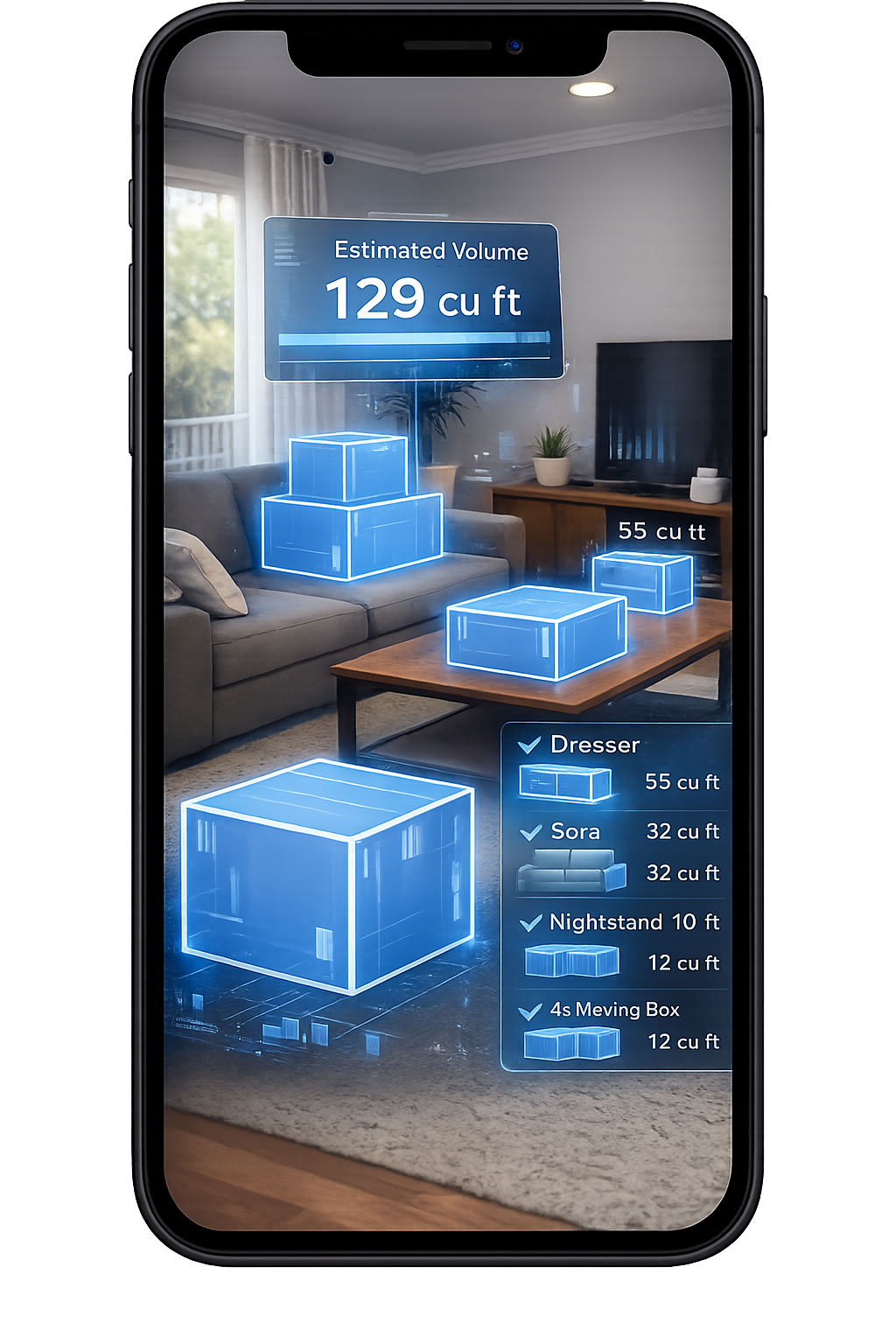
1. Scan Your Room With Your Phone
Walk around your space and scan your items in seconds.
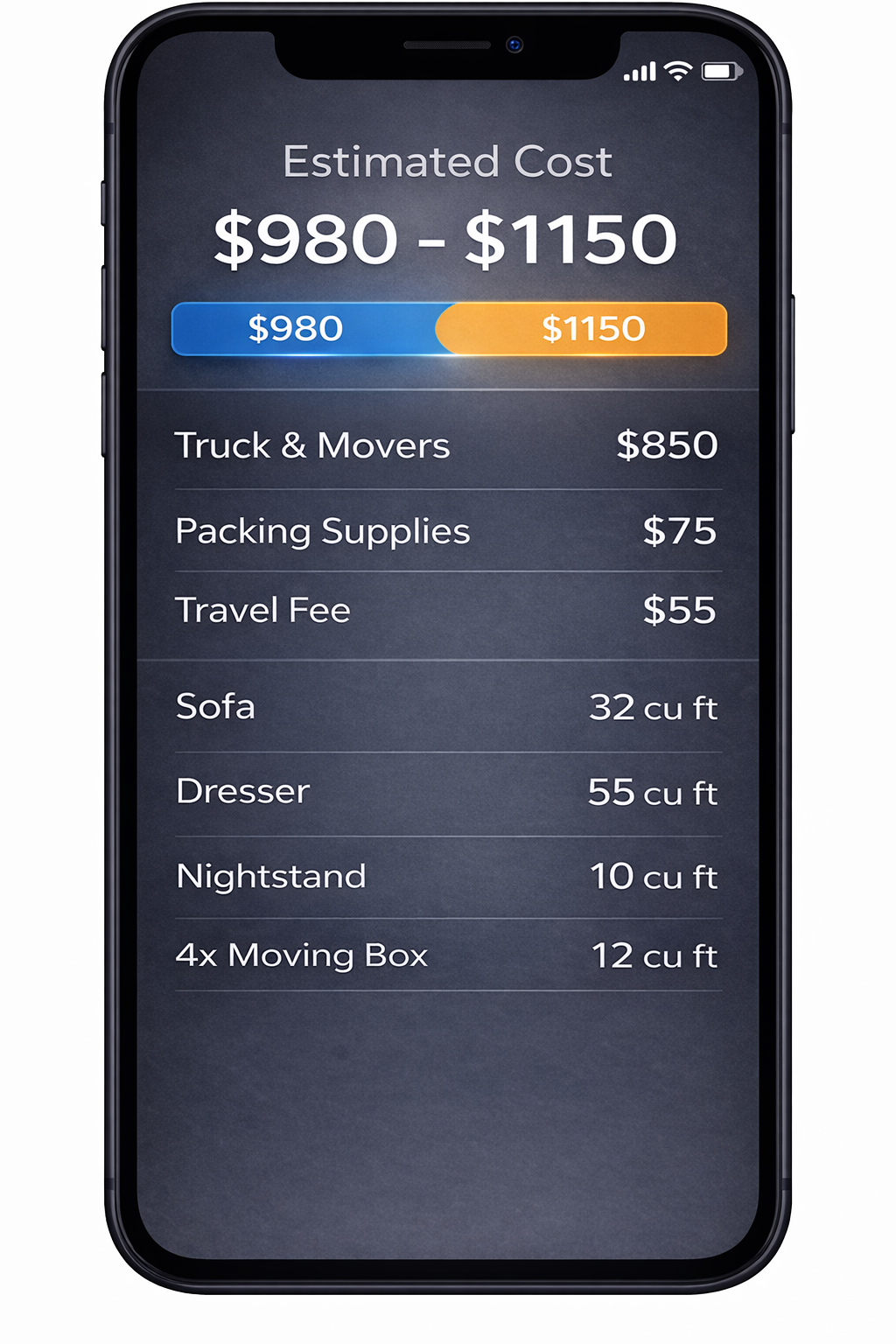
2. AI Detects Your Items
We identify your items and calculate volume for a clearer estimate.
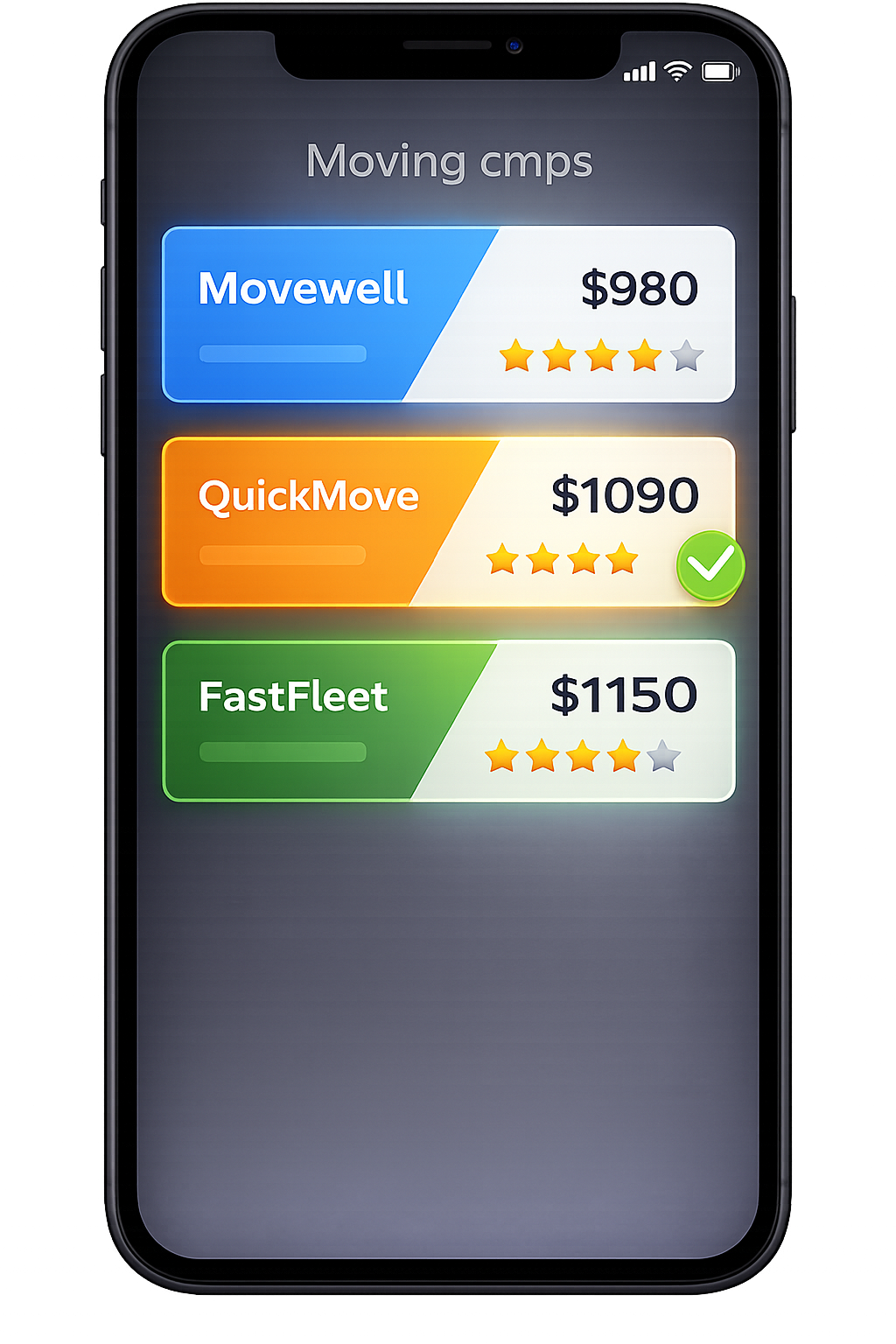
3. Compare Multiple Quotes
Compare verified mover quotes from the same scanned inventory.
Frequently Asked Questions
What’s the difference between a moving quote and a moving estimate?
In everyday language people mix the two, but there is a useful distinction: Estimate usually refers to the mover’s calculation based on your inventory, access, distance, and services. It may be non‑binding or binding, and a good estimate explains the assumptions and line items behind the number. Quote is often used for the offer you receive from a mover in writing—sometimes as a direct price (flat‑rate), sometimes as an hourly structure, and sometimes as a binding or not‑to‑exceed figure. On MoveCost, the idea is: 1. Build an AI‑backed estimate range using your real inventory. 2. Ask movers to turn that into formal quotes that clearly state how they’ll bill you and under what conditions the amount can change.
Are binding moving quotes always better than non‑binding ones?
Not always. Binding quotes can be helpful when: Your inventory is clear and unlikely to change much. Access conditions are stable (for example, elevators that work and predictable parking). You value price certainty and are comfortable with a specific scope. However, a binding quote built on incomplete or inaccurate information can cause problems later if the mover needs to revise it. Non‑binding estimates, when based on a detailed AI inventory, can be honest and useful planning tools as long as you understand they may move if your scope or conditions change. A healthy approach is often: Start with non‑binding estimates from multiple movers on the same AI inventory. For the mover you like best, discuss whether a binding or not‑to‑exceed option makes sense once everyone is confident the inventory and access notes are accurate.
How does an AI home scan improve the accuracy of my moving quotes?
AI scanning improves accuracy by reducing guesswork. When you walk your phone through your home, MoveCost’s AI identifies major items—sofas, beds, tables, dressers, TVs, shelves, box clusters—and approximates volume. You then confirm or adjust what it found and add access notes (stairs, elevators, parking, long carries). Movers that receive your inventory aren’t trying to picture your home from a two‑minute phone call. They see a structured list of what they’ll move and how they’ll move it. That leads to more realistic labor and truck plans, which in turn makes both non‑binding ranges and binding/flat‑rate quotes more grounded in reality.
Do I still need an in‑home or virtual walkthrough if I use MoveCost?
For many standard apartments and small to mid‑sized homes, an AI scan plus clear photos and notes is enough for movers to provide good estimates and quotes. You can think of MoveCost as a digital pre‑survey that many movers are happy to rely on. You might still consider an in‑home or virtual walkthrough if: You have a lot of high‑value or unusual items (large aquariums, complex art installations, heavy machinery). Your building access is extremely unusual or hard to describe (very tight staircases, complex service corridors). A mover requires a walkthrough before offering certain binding or flat‑rate structures. Even then, the AI inventory shortens and focuses that walkthrough because both you and the mover start from the same baseline list.
Which quote type should I ask for if I’m on a tight budget?
If you’re budget‑sensitive, focus less on the label and more on clarity and scope control: A well‑explained non‑binding estimate based on a detailed AI inventory can be safer than a vague flat‑rate number with unclear assumptions. A binding or not‑to‑exceed quote can be helpful once you and the mover are confident that your inventory and access details are accurate. Whatever you choose, aim for: One consistent AI inventory across all movers. Written descriptions of what’s included and excluded. Clear language about when and how the price can change. That way, even if you end up with a non‑binding structure, you know what to expect and what actions (adding items, changing dates) would legitimately push costs higher.
Can I compare hourly quotes and flat‑rate quotes fairly?
Yes, as long as the underlying information is the same and you understand the assumptions. Use your AI inventory to keep scope constant, then ask each mover: How many hours they think your move will take and with how many crew members. How they’ve accounted for stairs, elevators, parking, and long walks. What happens if the job takes longer or shorter than expected. For a flat‑rate or not‑to‑exceed offer, you can ask them to show how many hours and what crew size they planned inside that number. That lets you compare it against hourly quotes to see which option assumes more—or less—time for the same job.
What should I do if different movers give very different quotes for the same move?
First, make sure they truly saw the same information: Did each mover use your AI inventory and access notes from MoveCost? Did any mover skip or gloss over obvious challenges like stairs, elevators, or long carries? Then, compare: Crew size and hours assumed. What each mover includes by default vs. charges extra for. How clearly they explain estimate type (binding vs non‑binding) and change triggers. A quote that’s much lower than the others may be missing scope or planning less time than is realistic; a quote that’s much higher may be including services you don’t need. Use the frameworks on this page and, if needed, the Moving Estimate Guide for First‑Time Movers to ask targeted follow‑up questions before deciding.
Is MoveCost a moving company or a quote broker?
MoveCost is neither. It’s a moving cost and quote platform: We help you build an accurate inventory via AI scanning. We provide calculators and guides to help you understand what a reasonable range and estimate structure looks like. We give movers tools to respond to your inventory with their own estimates and quotes. We don’t run trucks or crews, and we don’t sell your details as generic leads to call centers. You choose which movers can see your inventory and quotes, and you book directly with the mover you prefer under their terms.