
Scan Your Home Once. Understand Moving Costs on Any Route or City Pair.
Use this national moving cost guide for routes and cities to see how prices change between local, intrastate, interstate, and cross‑country moves. Turn a single AI-powered home scan into cost insights for different origins and destinations, then plug your inventory into the right MoveCost calculators and quote tools.

National Moving Cost Guide for Routes & Cities – Scan Once, Compare Any Move | MoveCost.ai
Local, Intrastate, Interstate, Cross‑Country: What Each Route Type Means for Cost
Different routes use different pricing logic. Your AI inventory stays the same; the route type changes how movers use it. Your move can follow very different patterns even with the same inventory. Understanding which route type you’re planning helps you pick the right MoveCost tool and interpret the ranges you see. 1. Local Moves (Within the Same Metro) Examples: across town in Chicago, within Miami‑Dade, or between nearby suburbs. • Often priced by the hour for a crew + truck. • Distance is short; access and time matter more than miles. • Best tools: • Local Moving Cost Calculator Near Me – estimates local costs using your AI inventory. • Compare Local Movers Prices in My Area Online – compares local quotes. • City pages like Local Movers in Miami, FL or Moving Cost in Chicago, IL for metro‑specific context. 2. Intrastate / Regional Moves (Longer but Within One State or Region) Examples: Kendall → Orlando inside Florida; Dallas → Houston inside Texas; Chicago → another Illinois city. • Still mostly time and distance driven, but more road time than a short local hop. • Sometimes billed as extended local jobs, sometimes like mini long‑distance runs. • Best tools: • Moving Cost Calculator by State and City – route-specific ranges within a state. • Local Moving Cost Calculator Near Me if your mover treats it as a longer local job. 3. Interstate Moves (State to State) Examples: New York → Florida; Texas → Colorado; Miami → Atlanta; Chicago → Nashville. • Typically priced by volume/weight + distance, with separate line items for packing, access, and special handling. • Delivery often happens within a multi‑day window. • Best tools: • State to State Moving Cost Calculator Online – main interstate hub. • Moving Cost Calculator by State and City – city-pair nuance. • Origin/destination pages like Long Distance Movers From Miami, FL or Cheapest States to Move to From New York. 4. Cross‑Country / Long‑Haul Routes Examples: California → Florida; New York → California; Miami → Seattle; Chicago → Phoenix. • Longest distances, widest delivery windows, and more route variability. • Pricing is sensitive to how much space your shipment takes, how flexible your dates are, and whether your load is shared. • Best tools: • Moving Cost Calculator from California to Florida – example long corridor under the interstate hub. • Average Cost to Move a 4 Bedroom House Cross Country – large-home, cross‑country guidance. • Cheapest States to Move to in the US in 2026 – if you’re route‑flexible and comparing destinations. This guide helps you label your move correctly so you can combine the right route type with your AI inventory in the right calculator.
How City Pairs and Corridors Change Your Moving Cost—With Real Tool Links
Use these examples to see how one AI inventory behaves across different routes and cities, then open the tools that match your move. Because MoveCost uses the same AI inventory across all tools, you can scan once and then see how cost ranges look for very different city‑to‑city and state‑to‑state routes. Here are a few common scenarios and how they map to existing MoveCost pages: Example 1 – Local vs Shorter Intrastate: Chicago → Nearby Suburb vs Chicago → Another Illinois City • Same inventory, two different routes starting in Chicago. • What changes: drive time and whether your mover treats the job as local or intrastate. Best tools and pages: • Local Moving Cost Calculator Near Me – estimates costs if your move stays in the Chicago metro. • Moving Cost Calculator by State and City – shows how adding distance inside Illinois shifts cost. • Chicago cost hub: Moving Cost in Chicago, IL (2026 Guide). Example 2 – City-to-City Out of Miami: Miami → Orlando vs Miami → Atlanta vs Miami → New York • Same AI inventory from a Brickell condo or Kendall house. • Routes jump from in‑state to regional to full interstate. Best tools and pages: • Moving Cost in Miami, FL (2026 Guide) – baseline local vs long‑distance ranges from Miami. • Long Distance Movers From Miami, FL – long‑distance route behavior. • Moving Cost Calculator by State and City – compare Miami → Orlando vs Miami → Atlanta vs Miami → New York. Example 3 – Leaving New York for a Cheaper State • Same New York inventory applied to numerous target states. • What changes: distance, route corridor, and cheapest‑state tier. Best tools and pages: • Cheapest States to Move to From New York – NY‑specific cheapest‑state perspective. • Cheapest States to Move to in the US in 2026 – national move + living‑cost overview. • State to State Moving Cost Calculator Online – test New York → Florida, New York → North Carolina, New York → Texas, etc. Example 4 – West‑to‑East Cross‑Country: California → Florida • Same home inventory in California tested on a very long corridor. • What changes: cross‑country distance, truck days, and delivery windows. Best tools and pages: • Moving Cost Calculator from California to Florida – route‑specific leaf under the interstate hub. • State to State Moving Cost Calculator Online – see how CA→FL compares to CA→TX or CA→NC. • Moving Cost Calculator by State and City – refine by origin/destination city pairs inside CA and FL. You can treat this routes & cities guide as the map legend: it shows how different city‑pair questions connect back to your one AI inventory and the right MoveCost calculators.
Scan Your Home Once, Then Plug Your Inventory Into Any Route or City Tool
The AI scan you start from this guide is the same scan that powers local, state‑to‑state, city‑pair, and route‑specific calculators. You don’t need a different inventory for every route you test. The same scan you start here becomes your central move profile everywhere on MoveCost. What your AI scan creates: • A room‑by‑room inventory of furniture, boxes, and bulky items. • An estimate of your move volume and a typical weight band. • Optional access notes for current and future homes (stairs, elevators, long walks, parking, docks). Where that inventory can go next: • Into the AI Moving Cost Calculator Online Free to see an initial cost range for any route type. • Into the Local Moving Cost Calculator Near Me for short in‑metro moves. • Into the State to State Moving Cost Calculator Online for interstate comparisons. • Into the Moving Cost Calculator by State and City for city‑pair detail. • Into home‑size tools like Moving Cost Calculator for 3 Bedroom House or Average Cost to Move a 4 Bedroom House Cross Country. • Into access‑focused tools like Moving Cost Calculator Including Stairs and Elevator. • Into city hubs like Moving Cost in Miami, Moving Quotes in Miami, Moving Cost in Chicago, Moving Quotes in Chicago, or route pages like Moving Cost Calculator from California to Florida. Because all of these tools see the same underlying inventory, you can: • Compare short routes vs long routes realistically. • See how keeping vs selling items changes cost across many routes. • Avoid rebuilding your moving list every time you ask a new question about a new city or state.
When to Use Local, State-to-State, City, or Route Pages After This Guide
This page explains route logic and city context; the linked tools run the actual numbers for your origin and destination. Once you’ve scanned your home and understand the route types, your next step depends on where you’re going and how far. Use Local Moving Cost Calculator Near Me when: • Your move is inside one metro or close suburbs. • You mostly care about crew hours and access, not interstate delivery windows. Use State to State Moving Cost Calculator Online when: • You’re crossing state lines. • You want to compare multiple destination states from the same origin with the same inventory. Use Moving Cost Calculator by State and City when: • You know your origin and destination cities or are comparing specific metros. • You care how different city‑pair routes (for example, Los Angeles → Phoenix vs Los Angeles → San Francisco, or Chicago → Naperville vs Chicago → Milwaukee) change your cost picture. Use route‑specific pages like Moving Cost Calculator from California to Florida when: • You’ve already chosen a long corridor and want deeper examples for that lane. • You want to understand how that particular route behaves on distance, timing, and cost bands for common home sizes. Use city hubs like Moving Cost in Miami, Moving Quotes in Miami, Moving Cost in Chicago, and Moving Quotes in Chicago when: • Your move starts or ends in a major metro and you want city‑level access, timing, and pricing context. • You want to see how quotes and estimates are structured in a real city example while using your own inventory as the reference. This routes & cities guide stays neutral: it teaches you how to think about routes and city pairs. The calculators and city pages then answer “OK, so what does that mean for my exact origin and destination?”
Example Ways to Use This Routes & Cities Guide with MoveCost Tools
Scan once, then pick the planning path that matches your move. Here are a few common user journeys and how they combine this guide with specific tools: Path 1 – Local Renter Testing a Few Nearby Neighborhoods • Situation: You’re in a 1‑bedroom apartment now and thinking about moving across town. • Steps: 1. Scan your current home from this guide. 2. Use Local Moving Cost Calculator Near Me to see local ranges. 3. Use Compare Local Movers Prices in My Area Online to compare companies. 4. Refer back to this guide to understand how different local routes (short vs slightly longer) actually behave. Path 2 – Family Comparing Several States Before Leaving • Situation: You’re moving a 3‑ or 4‑bedroom home and are flexible on destination. • Steps: 1. Scan your home from this guide and note stairs/elevators if any. 2. Use Moving Cost Calculator for 3 Bedroom House or Average Cost to Move a 4 Bedroom House Cross Country to see home‑size implications. 3. Use State to State Moving Cost Calculator Online to compare a handful of states. 4. Use Cheapest States to Move to in the US in 2026 to layer living costs on top of move costs. 5. Come back to this guide to see how different route types (regional vs cross‑country) affect your decision. Path 3 – New Yorker Looking for Cheaper States • Situation: You live in New York and want a cheaper state but haven’t picked one. • Steps: 1. Scan your New York home from this guide. 2. Use Cheapest States to Move to From New York for NY‑specific cheapest‑state patterns. 3. Use State to State Moving Cost Calculator Online and Moving Cost Calculator by State and City to test specific routes. 4. Refer to this guide to stay clear on which routes are local, interstate, or cross‑country as you compare. Path 4 – Miami Resident Torn Between Local and Leaving the State • Situation: You live in Miami and aren’t sure if you’re moving within the metro or out of Florida. • Steps: 1. Scan your Miami home from this guide. 2. Use Moving Cost in Miami, FL (2026 Guide) to see local vs long‑distance bands. 3. Use Local Movers in Miami, FL for short routes and Long Distance Movers From Miami, FL for out‑of‑state options. 4. Use Moving Cost Calculator by State and City if you’re testing specific out‑of‑state metros. 5. Come back here to keep track of how each route type changes cost and timing. Path 5 – Chicago Apartment Renter Considering City vs Suburbs • Situation: You’re in a Chicago apartment and debating staying in the city versus moving to a nearby suburb. • Steps: 1. Scan your Chicago home from this guide. 2. Use Moving Cost in Chicago, IL (2026 Guide) to understand typical in‑city vs city‑to‑suburb ranges. 3. Use Moving Quotes in Chicago, IL to see how multiple movers price the same inventory on different Chicago routes. 4. Use Moving Cost Calculator by State and City to compare Chicago → nearby suburbs with Chicago → another city or state. 5. Return here to stay oriented on which scenarios are local, intrastate, or interstate. Whatever your path, the pattern is the same: scan → understand route types with this guide → run the right calculators → compare movers.
How It Works

1. Scan Your Room With Your Phone
Walk around your space and scan your items in seconds.
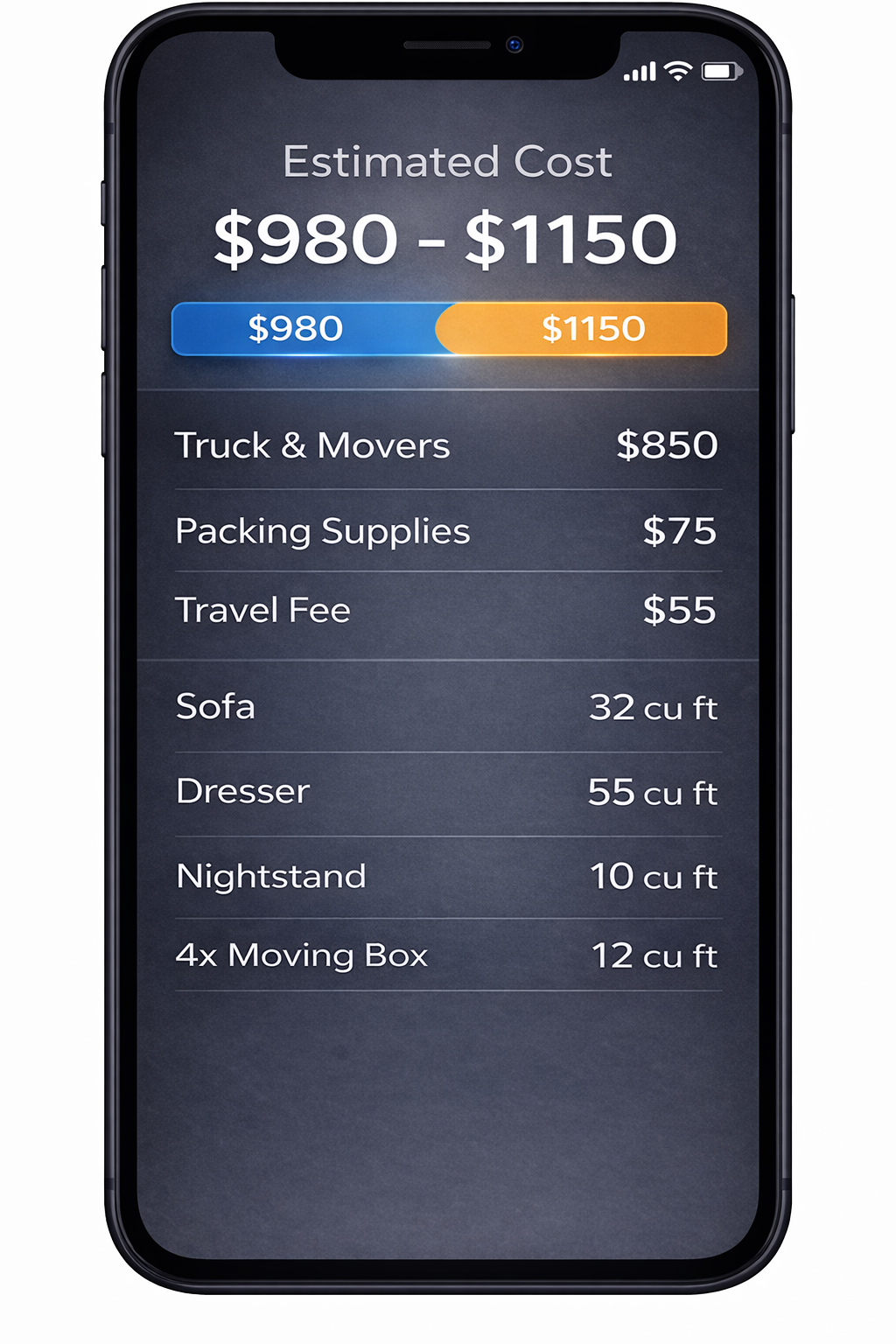
2. AI Detects Your Items
We identify your items and calculate volume for a clearer estimate.
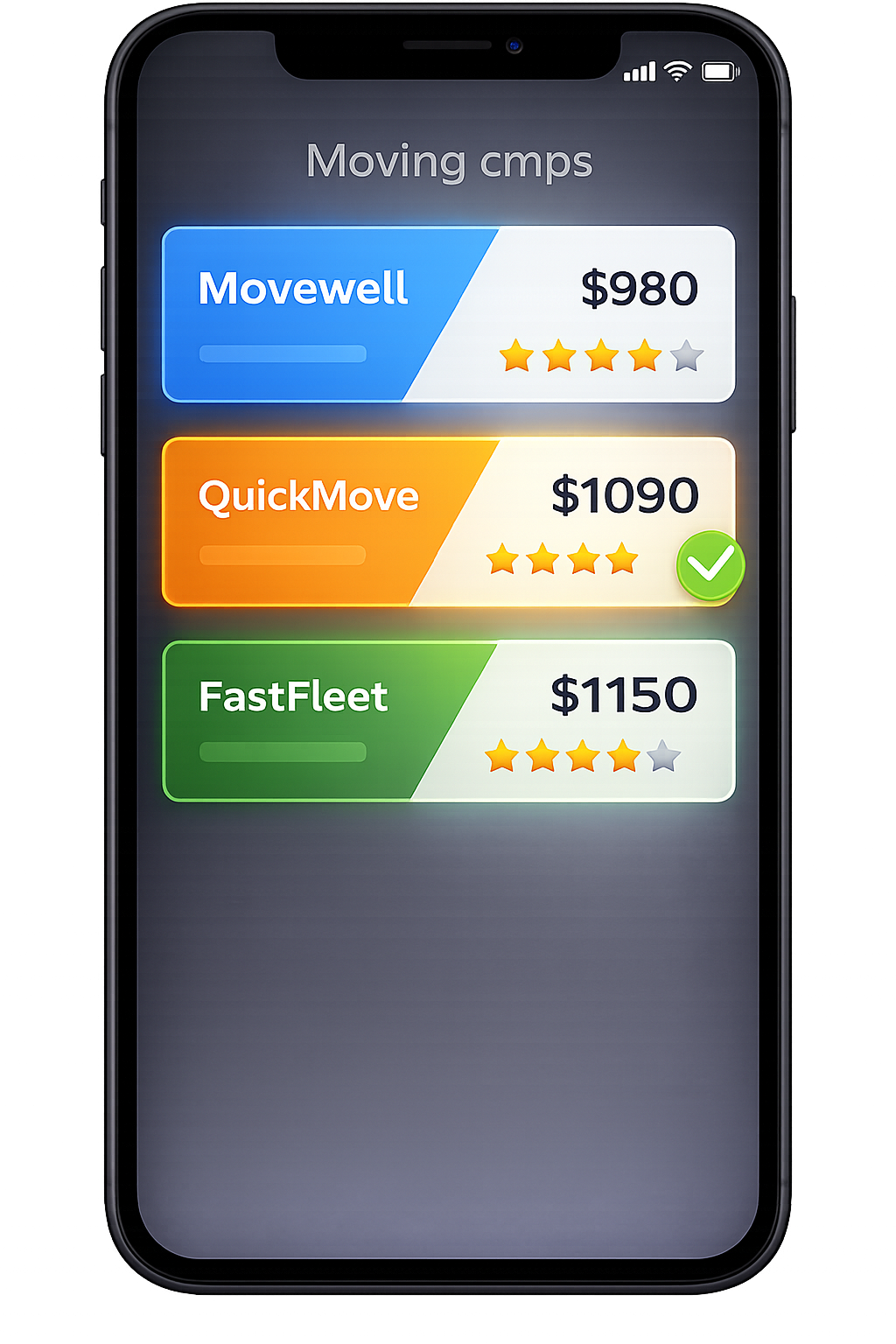
3. Compare Multiple Quotes
Compare verified mover quotes from the same scanned inventory.
Frequently Asked Questions
What does this routes & cities guide do that your calculators don’t?
This routes & cities guide is meant to explain and organize, not to replace calculators. Use it to: Understand the difference between local, intrastate, interstate, and cross‑country routes. See how city‑to‑city and state‑to‑state moves behave differently on cost and timing. Decide which MoveCost tool (local calculator, state‑to‑state hub, by‑state‑and‑city calculator, or a route/city page) you should open next. Then use calculators like Local Moving Cost Calculator Near Me, State to State Moving Cost Calculator Online, and Moving Cost Calculator by State and City to run actual numbers for your origin and destination. City and route pages, such as Moving Cost in Miami, Moving Cost in Chicago, Moving Quotes in Miami, Moving Quotes in Chicago, or Moving Cost Calculator from California to Florida, then anchor those numbers in concrete, on‑the‑ground examples for one metro or corridor.
Do I need to run a separate scan for each route or city pair I’m considering?
No. One of the main benefits of using MoveCost is that you scan once and reuse that AI-built inventory across all route and city tools. After you’ve scanned your home: Local tools use the same inventory to estimate short, in‑metro moves. Interstate tools use it to estimate state‑to‑state costs across many different destinations. City-based calculators apply it to specific city pairs. Route-specific pages (like California → Florida) and city hubs (like Miami or Chicago) use it to show you route‑ or metro‑level nuances. If your belongings change significantly—because you sell furniture, add items from storage, or declutter—you can update your inventory once and then re‑run whatever routes and cities you’re considering.
How do I know whether my move is better handled by the local calculator or the state-to-state calculator?
A practical rule of thumb: Use Local Moving Cost Calculator Near Me when: You’re staying in the same metro area or very close suburbs. Movers in your area say they treat the route as an hourly local job. Use State to State Moving Cost Calculator Online when: You’re crossing a state line or traveling a long distance inside a state. Movers talk about linehaul, volume/weight, and delivery windows instead of just hourly ranges. If you’re unsure, this guide can help you classify your route, and you can also use Moving Cost Calculator by State and City: if your city‑pair combination looks more like a local hop, local tools are likely more appropriate; if it looks like a multi‑hour or multi‑day drive, state‑to‑state logic is usually the right fit.
Can I use this guide if I’m only comparing cities inside one state?
Yes. City‑to‑city moves within a single state are still routes, and they still benefit from route‑aware thinking. You can: Scan your home once from this guide. Use Moving Cost Calculator by State and City to test multiple city pairs inside your state. Use Local Moving Cost Calculator Near Me if one of those moves is really just a longer local hop. Refer back here whenever you want to sanity‑check how far a given route sits on the spectrum between local, intrastate, and interstate. The key is that you’re always comparing cities using the same underlying inventory and access details, so differences in cost reflect the route and local markets—not a different guess about how much you own.
What should I do right after reading this routes & cities guide?
The most efficient next steps are: 1. Scan your home once from this page or the AI hub: create a reusable AI‑powered inventory. 2. Classify your route using the route types section (local, intrastate, interstate, cross‑country). 3. Open the calculator that matches your route type: Local → Local Moving Cost Calculator Near Me. Interstate → State to State Moving Cost Calculator Online. City‑pair planning → Moving Cost Calculator by State and City. Specific corridors → route pages like Moving Cost Calculator from California to Florida. 4. Use relevant city or audience pages (Miami or Chicago clusters, cheapest‑states, student, 3‑bedroom, 4‑bedroom) if they match your situation. Throughout that process, come back to this guide whenever you want to double‑check how a new city or route fits into the overall structure of MoveCost’s tools and what that means for your moving budget.