
Compare Real Moving Quotes in Chicago Without Calling 5 Different Movers
Scan your Chicago home with AI, see itemized quotes from local and long‑distance movers, and understand why prices differ for high‑rises in the Loop, North Side walk‑ups, and suburban routes—before moving day.

moving quotes in Chicago, IL
Why Chicago Moving Quotes Can Be $400 Apart for the Same One‑Bedroom
If you’ve called a few Chicago movers for the same one‑bedroom and gotten wildly different prices, it’s usually not a mistake—it’s the city. In Chicago, the exact same amount of furniture can cost very different amounts to move depending on where and how you live: • Downtown high‑rises in Streeterville, River North, Lakeshore East, and the Loop often require freight elevator reservations, front‑desk check‑ins, loading‑dock scheduling, and certificates of insurance (COIs) before a crew can even enter the building. • Walk‑up apartments in Wicker Park, Logan Square, Lakeview, and Pilsen can mean three or four flights of tight back stairs and long walks down gangways or alleys, with movers carrying every box by hand. • Classic Chicago two‑flats and three‑flats in neighborhoods like Avondale, Ukrainian Village, and Bridgeport may have easier front steps but long walks from crowded side streets, plus basement or attic storage that adds extra trips. • South Side bungalows and townhomes in Beverly, Hyde Park, or Bronzeville may include heavier furniture, garages, and backyard sheds that increase volume even if the home doesn’t feel cluttered. • Suburban routes from the city out to Oak Park, Evanston, Skokie, or Naperville add mileage, tolls, and time spent on the Kennedy, Eisenhower, Stevenson, or I‑294. Most generic quote forms don’t capture these details well. One Chicago mover might assume easy freight elevator access and a reserved loading dock in the Loop, while another expects three flights of stairs and street parking only off Milwaukee Avenue. That’s how you end up with moving quotes that don’t match each other—or the final bill. MoveCost pulls that local reality into one place. Instead of describing your couch and bed over the phone, you scan your actual rooms. Our AI translates your Chicago apartment or condo layout into the kind of detailed inventory and access notes movers actually use to price the job: • Rough volume and item count based on what’s in your Lakeview, West Loop, or Rogers Park home • Indicators like “3rd‑floor walk‑up,” “freight elevator only,” or “alley access” • Notes on long hallways, shared gangways, basement storage, or detached garages Then you see multiple Chicago mover quotes side‑by‑side with a clear breakdown of what’s included, what’s not, and why the price changes between, for example, a Logan Square walk‑up, a South Loop high‑rise, and a Beverly bungalow headed out to the suburbs.
AI Home Scanning That Understands Chicago Buildings
Chicago moves are rarely one‑size‑fits‑all. A third‑floor walk‑up in Logan Square with narrow back stairs is a very different job than a Gold Coast high‑rise with a loading dock, union‑staffed freight elevators, and a strict move window. That’s why our process starts with your actual home, not a generic checklist. Using your phone, you do a quick walkthrough of your rooms—bedroom, living room, kitchen, storage cages in the basement, even that bike hanging in the hallway or on a back porch in Ravenswood. Our AI analyzes what it sees: furniture, boxes, TVs, dressers, bookshelves, and approximate volume. You can tweak anything it misses or add special items like a piano, large plants, or heavy gym equipment. Behind the scenes, we turn that into an accurate inventory movers in Chicago understand. We factor in key details that affect quotes: • Elevator vs. stairs – Whether you have a passenger or freight elevator in Streeterville or the Loop, or three back‑stairs flights in Humboldt Park, Albany Park, or Uptown. • Distance from truck to door – Common on busier streets like Belmont, Clark, Damen, or Michigan Avenue where trucks can’t always park right out front and may need to park around the corner or in an alley. • Alley and loading access – Many North Side and Near West Side buildings rely on alleys, loading docks, and tight turns that can slow crews down and change which size truck is practical. • Typical traffic patterns – If your route is likely to hit backups on the Kennedy (I‑90/94), Dan Ryan, Eisenhower (I‑290), Stevenson (I‑55), or Lake Shore Drive, which can matter for timing‑based pricing. Movers on our platform receive this structured information instead of a vague “one bedroom, not much stuff” description. That allows them to give sharper, more realistic estimates upfront. You end up with moving quotes tied to your actual building: how many trips up and down the back stairs in your greystone, how much time in and out of the loading dock near the Loop, or how long it takes to navigate your block and alley—not just the square footage listed on your lease.
High‑Rise vs. Walk‑Up: How Chicago Moving Quotes Really Differ
Two Chicago one‑bedroom moves can look identical on paper but behave very differently in real life. Here’s how our comparison view makes those differences visible instead of burying them in fine print. Example 1: Wicker Park Walk‑Up to Logan Square Walk‑Up A hypothetical one‑bedroom move with basic furniture and 25–30 boxes: • Origin: Third‑floor walk‑up off North Avenue in Wicker Park • Destination: Second‑floor walk‑up near the Logan Square Blue Line • Access notes: Tight back staircases, alley access only, standard street parking on a residential permit street When you scan your home, our AI notes the number of large items, the likely volume, and your access details. Movers might respond with quotes that differ based on: • Crew size: 2 movers vs. 3 movers depending on how many stair trips they expect • Hourly minimums: 3‑hour vs. 4‑hour minimums, which matters if you’re only moving a small place • Travel time policy: Whether time from their garage (for example, in Cicero, Irving Park, or along Elston Avenue) is billed as part of the job On your screen, you see: • Estimated total hours based on a third‑floor walk‑up with alley access • Whether stair or long‑carry fees might apply for the back staircase and gangway • How Saturday rates differ from a Tuesday morning in March, when street parking is easier and traffic lighter Example 2: Streeterville High‑Rise to South Loop High‑Rise Same rough volume, very different logistics: • Origin: 30th‑floor high‑rise in Streeterville with a reservable freight elevator and loading dock • Destination: High‑rise condo in South Loop near Grant Park, loading dock only • Building rules: Certificates of insurance required for both, set move windows (for example, 9 a.m.–1 p.m.) and protection for lobby floors and walls Your AI scan plus building notes gives movers: • An expected number of elevator trips for your furniture and boxes • Dock and elevator time‑window constraints for both buildings • Likely waiting time for freight elevators shared with other deliveries On your comparison view, you’ll see clear callouts for: • Whether COI paperwork handling is included or needs to be handled directly with your building • How many movers are allocated to stay within your elevator window • If there are potential fees for overtime or rescheduling if the building window is missed Example 3: Rogers Park Two‑Flat to Oak Park Condo A move that combines city stairs with a suburban building: • Origin: Second‑floor unit in a Rogers Park two‑flat with basement storage • Destination: Elevator condo building in Oak Park • Route: Likely travel along Lake Shore Drive and the Eisenhower or via Peterson and I‑94/I‑290 In this case, your quotes may differ based on: • Whether the mover assumes a second trip for basement storage and garage items • How much drive time they build in for rush‑hour traffic out of the city • Whether they plan for street parking vs. a reserved loading or guest space in Oak Park These scenarios are illustrative, but this is the level of detail our platform exposes. Instead of sorting purely by price, you can see why a Streeterville high‑rise quote might be higher than a Wicker Park walk‑up—or why a Rogers Park to Oak Park route prices differently than a Lakeview to Uptown local move—even when the furniture list looks similar.
Side‑by‑Side Chicago Quote Examples from AI‑Built Inventories
To make Chicago moving quotes easier to understand, MoveCost shows you how different movers interpret the same AI inventory. Here are anonymized, hypothetical examples based on common Chicago moves that mirror what you might see after your own scan. Example A: Studio in Lakeview to One‑Bedroom in Uptown • Inventory from AI scan: Bed, sofa, TV, desk, 20 boxes, bike • Access: Second‑floor walk‑up off Broadway to elevator building near Wilson • Timing: Weekday in April Your results page might show: • Mover 1: Hourly rate with 3‑hour minimum Notes: Includes basic disassembly, pads, and shrink wrap; additional fee if truck must park more than 100 ft from entrance or if a long alley carry is required. • Mover 2: Flat rate based on inventory + travel Notes: Includes travel from a North Side yard, but stair fees may apply if there is an unexpected extra flight or basement storage. We highlight for you: • Which quote assumes easier street parking on Broadway or Sheridan • Which one already bakes in extra time for typical North Side congestion around Irving Park or Foster • How adding a single stop at a storage unit in Ravenswood or Andersonville would change both quotes Example B: Two‑Bedroom in Beverly to Naperville • Inventory from AI scan: 2 beds, sectional, dining set, 40+ boxes, garage items, yard tools • Access: Bungalow with front steps and basement to suburban home with driveway in Naperville • Timing: Saturday in late June Movers might respond with: • Mover A: Time‑and‑distance local quote with a 4‑hour minimum • Mover B: Volume‑based quote for a larger truck with fewer trips between Beverly and Naperville Your comparison screen surfaces details like: • Whether tolls on I‑57/I‑80, I‑55, or I‑294 are included • If a second day is needed for overflow items or if it’s planned as a single push • How tightly your move time is scheduled around peak weekend traffic leaving the city Example C: West Loop Loft to Logan Square Walk‑Up • Inventory from AI scan: Loft‑style furniture, large sectional, dining table, 30+ boxes, bikes • Access: Freight elevator in a West Loop building to third‑floor walk‑up near Logan Square • Timing: End‑of‑month weekday Possible quote differences: • One mover may send a larger crew to handle the stairs quickly at the destination • Another may keep the crew small but add time, resulting in a lower hourly rate but similar total cost Even though these are hypothetical, the structure mirrors what you actually see when your AI scan is processed: multiple Chicago‑area movers giving itemized responses to the same, detailed inventory instead of numbers pulled from generic room counts.
Local vs. Long‑Distance from Chicago: How Quotes Are Built Differently
Whether you’re sliding a few blocks from Lincoln Park to Old Town or relocating from Rogers Park to another state, the way your quote is built changes—and it helps to understand why before you compare prices. Local Chicago Moves For moves within the Chicago metro area, crews usually charge hourly with a minimum number of hours. Time to navigate city traffic, find parking, and manage elevators gets baked into that quote. Our system factors in: • Typical congestion patterns for your route (for example, if movers will likely hit Eisenhower or Stevenson backups on an evening move) • How far the truck may need to park from your building on streets like Belmont, Clark, Damen, Milwaukee, or 79th • Building rules: move‑in/move‑out windows, elevator reservations, loading dock access, and certificate of insurance requirements common in the Loop, Streeterville, and other downtown neighborhoods Long‑Distance Moves To or From Chicago For longer moves—like leaving a West Loop apartment for a job in Seattle, or moving back from another state into a condo near the lakefront—the quote often depends on: • Total size and weight of your shipment based on your AI inventory • Mileage from your Chicago origin to destination • Whether your items travel direct or share space on a truck Your AI inventory helps long‑distance carriers approximate volume and weight more precisely. You’ll see different pricing models clearly labeled, such as binding, non‑binding, or not‑to‑exceed estimates. If you want to explore long‑distance costs beyond Chicago specifically, you can also use MoveCost’s route‑focused tools, including the State to State Moving Cost Calculator Online and our guide to the average cost to move a 4 bedroom house cross country. Those tools use the same AI inventory concept but zoom out to national routes and bigger homes, so you can see how a neighborhood‑to‑neighborhood move from Chicago compares to a cross‑country relocation.
Chicago‑Specific Surprises That Change Your Final Moving Bill
The toughest part of moving in Chicago isn’t always the packing. It’s the surprises: trucks that can’t fit into your alley, buildings that demand a certificate of insurance on the spot, street cleaning that removes your parking for the day, or a snowstorm that appears on the one date your building allowed. When you request moving quotes through MoveCost, we ask for details that tend to create last‑minute add‑ons for Chicago movers: • Which floor you’re on and whether there’s an elevator (passenger or freight) • How far the walk is from the truck to your door (front sidewalk, alley, gangway, or loading dock) • Any tricky access like spiral staircases, basement units, raised first‑floor walk‑ups, or attic bedrooms common in Chicago bungalows • Whether your building needs a certificate of insurance and has a specific move window or requires floor protection Our AI walkthrough surfaces these visually too. Movers are asked to list potential extra fees—like additional stair flights, long carries down alleys, parking tickets, or waiting time for delayed freight elevators—upfront. Seasonality matters here as well: • Winter moves can take longer when sidewalks are icy, alleys aren’t fully plowed, or when crews need to lay down extra floor protection in lobbies and hallways. • Summer moves may run into festival traffic near Grant Park, Wrigley Field, or along the lakefront, and the first and last weekends of the month are often busier around common lease dates. By capturing these Chicago‑specific details at the quote stage, you can compare movers on more than just the base price. You can compare how they handle COIs, timing restrictions, weather, parking, and access—before anyone shows up with a truck.
How MoveCost Works for Chicago Moving Quotes, Step by Step
You don’t need to be a moving expert to get fair quotes in Chicago. MoveCost walks you through a simple process that fits city life—busy schedules, tight apartments, and complicated buildings. 1. Scan your home with AI Take 10–15 minutes to walk through your place with your phone. Capture every room, plus storage spaces, basement storage cages, back porches, garages, and any off‑site storage units in Chicago or nearby suburbs. 2. Fine‑tune your inventory and building notes Add details like “narrow back staircase,” “no elevator, third floor,” “freight elevator reservation required,” “COI required,” or “loading dock access only.” If your building near downtown gave you a move‑in packet, you can copy key rules directly into your notes. 3. Request Chicago‑specific quotes Your structured inventory is sent to movers who handle your route and building type, whether that’s a North Side walk‑up, a South Loop high‑rise, a South Side bungalow, or a suburb‑bound family home. 4. Compare quotes side‑by‑side On one screen, you can see: • Pricing structure (hourly vs. flat‑rate vs. volume‑based) • How building access, stairs, elevators, and parking are handled • What’s included (basic protection, disassembly, simple furniture assembly) and what might be extra if weather, parking, or stairs are worse than expected 5. Adjust details and re‑compare if needed If your plan changes—new date, added storage stop, different neighborhood, or a change from local to long‑distance—you can update your info and request updated pricing so you’re not relying on an outdated estimate. 6. Choose a mover and line up building logistics Once you select a quote, you can confirm key details, share any building contact information, and coordinate freight elevator or loading dock times with your building. Your final choice is based on a clear, itemized comparison—not guesswork or rushed phone calls a few days before your move.
When to Use Other MoveCost Calculators Alongside Your Chicago Quotes
The Chicago moving quotes you see on this page focus on your specific origin and destination around the city and suburbs. If you’re still planning and budgeting, it can help to combine this with MoveCost’s other tools: • Use the AI Moving Cost Calculator Online Free if you want a quick, high‑level cost range before you decide on exact dates or even your final neighborhood in the Chicago area. • Try the Moving Cost Calculator by State and City if you’re comparing moving from Chicago to a specific state or deciding between multiple destination cities. • If you live in a larger home, the Moving Cost Calculator for a 3 Bedroom House and our guide to the average cost to move a 4 bedroom house cross country can help sanity‑check whether your Chicago quotes are in the right ballpark for bigger inventories. • If your building has long staircases or an older elevator, the Moving Cost Calculator Including Stairs and Elevator shows how those details can change labor time—and why two Chicago movers might price the same route differently. All of these tools share the same idea: an accurate inventory and clear building details first, then side‑by‑side pricing. Starting your planning with them can make the specific Chicago quotes you get from this page easier to interpret and compare, and gives search engines a clear signal that this page is part of a wider, Chicago‑relevant moving cost cluster.
How This Page Fits Into MoveCost’s Chicago Moving Quote Tools
This page is specifically focused on comparing Chicago moving quotes based on an AI scan of your current home. It sits alongside other MoveCost tools that look at costs from different angles: • Use this page when you want to line up multiple movers and compare their quotes for a real Chicago route—for example, West Loop to Ravenswood, Hyde Park to Bronzeville, or Logan Square to Oak Park. • Use the Local Moving Cost Calculator Near Me when you want to understand typical local price structures in your part of Chicago before inviting specific movers to quote. • Use the Compare Moving Company Quotes Instantly Online guide if you’re trying to understand the fine print inside competing offers, such as hourly minimums, fuel surcharges, and access fees. By linking these tools together and clearly defining what this page is about—Chicago moving quotes built from an AI inventory—search engines and users can both see that this is a Chicago‑specific comparison page, not just a copy of our other city content.
How It Works

1. Scan Your Room With Your Phone
Walk around your space and scan your items in seconds.
2. AI Detects Your Items
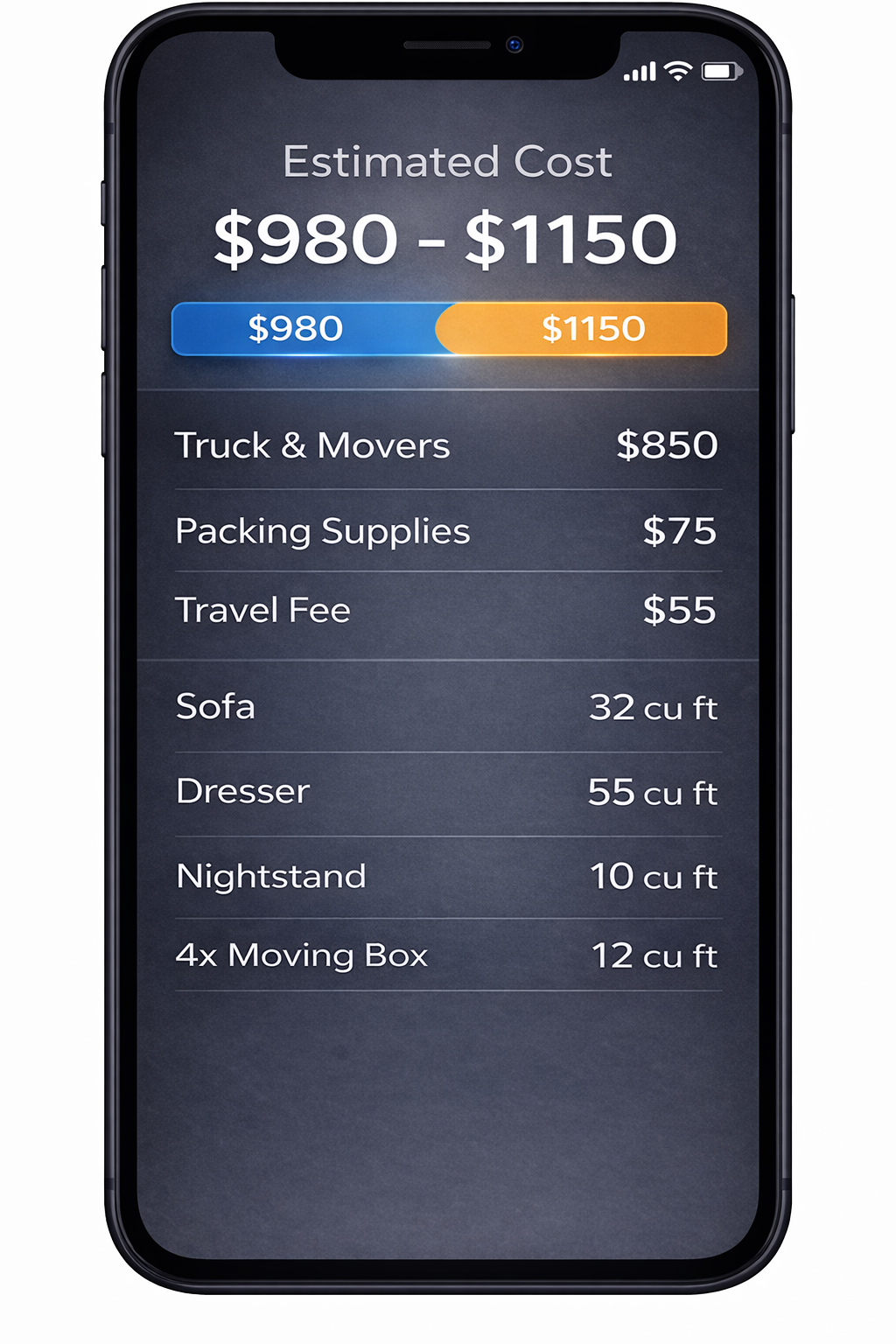
We identify your items and calculate volume for a clearer estimate.
3. Compare Multiple Quotes
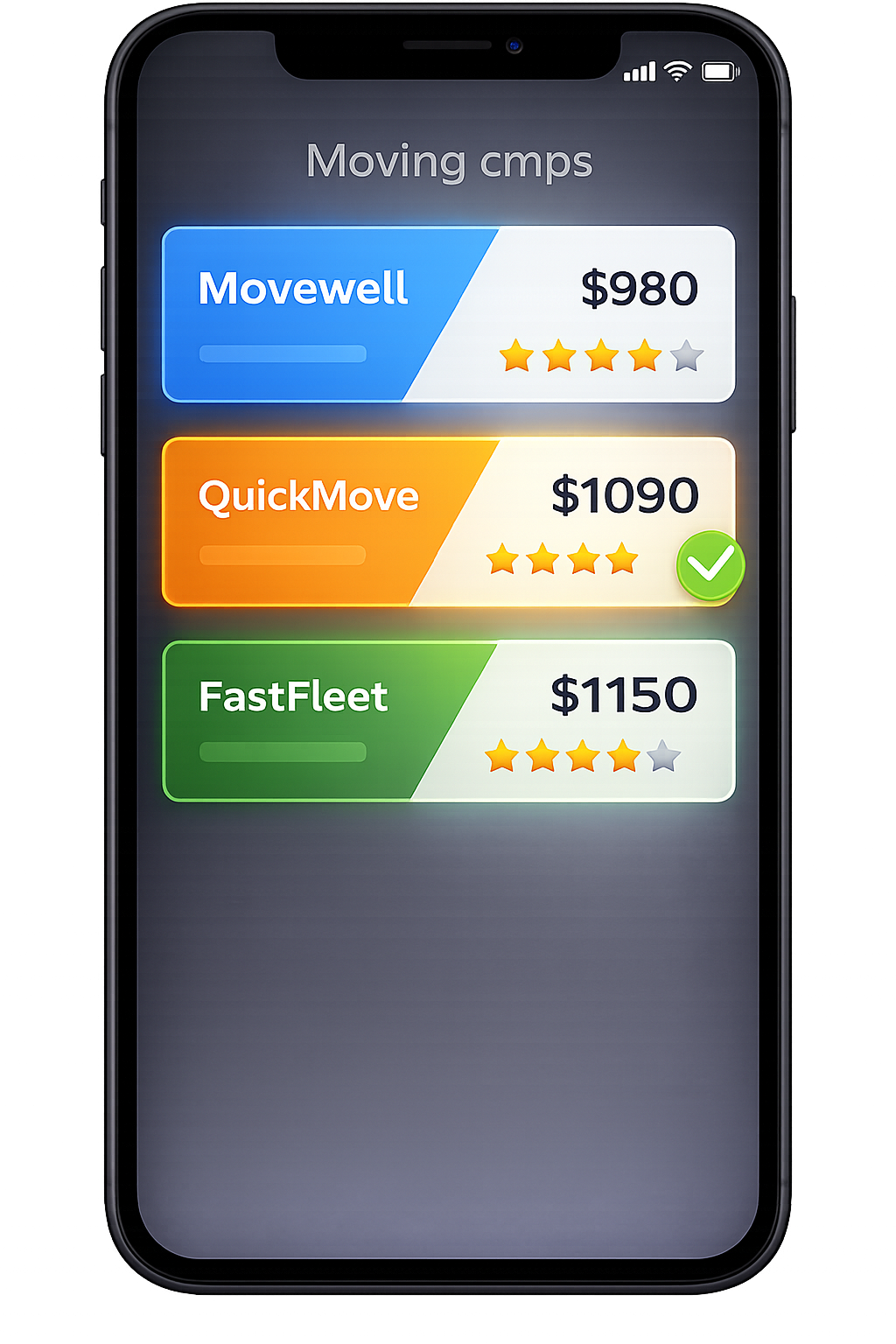
Compare mover quotes for Chicago, IL from the same scanned inventory.
Frequently Asked Questions
How is this Chicago moving quotes page different from other city pages?
This page focuses only on moving quotes for Chicago and nearby suburbs. The examples, scenarios, and FAQs are built around Chicago‑specific details like Loop and Streeterville high‑rises with COI requirements, North Side walk‑ups with tight back stairs, South Side bungalows with basement storage, and common routes to suburbs like Oak Park, Evanston, and Naperville. That local focus makes it different from our Miami or national moving pages, which use different examples, buildings, and traffic patterns.
How accurate are Chicago moving quotes if I live in a third‑floor walk‑up?
Third‑floor walk‑ups are extremely common here, so movers are used to them. The AI inventory scan helps estimate how many trips up and down the stairs your items will take, and you can confirm which floor you’re on, how tight the staircase is, and how far the walk is from the truck to your door or alley. When those details match reality, quotes for a Lakeview, Logan Square, Wicker Park, or Pilsen walk‑up tend to be much closer to the final bill. Surprises usually happen when a place turns out to be very different from what was described, so adding notes about back stairs, gangways, and basement storage is worth the extra minute.
How do winter moves affect Chicago moving quotes?
Winter doesn’t always mean cheaper moves in Chicago—it mainly changes how long a move can take. Crews may need extra time to deal with snow and ice on sidewalks, alleys, and exterior stairs, and they often lay down additional floor protection in lobbies and hallways. If you’re moving during a typical Chicago winter, movers may build in more time for safety and access, even if the base hourly rate is similar. When you request quotes, include your exact move date and any concerns about snow or ice so movers can factor that reality into their estimates.
How do I handle certificates of insurance (COI) and freight elevators for downtown Chicago moves?
Many high‑rise buildings in the Loop, Streeterville, River North, and Lakeshore East require a COI and a reserved freight elevator window. When you request quotes, you can specify your building’s requirements and summarize any move‑in rules you’ve been given. Movers that regularly serve those buildings can factor in the extra coordination time and may ask you to confirm elevator reservations before moving day. On your comparison screen, look for notes that explicitly mention COIs, elevator scheduling, move windows, and lobby protection so you know which movers are planning around your building’s rules.
What should I know about parking and permits for Chicago moving trucks?
Parking can be one of the biggest variables in a Chicago moving quote. Some neighborhoods have residential permit parking, limited loading zones, or alleys that are too tight for larger trucks. In your quote request, you can describe where trucks usually park on your block, whether you have alley access, and if your alderman’s office or building has mentioned temporary parking signs. Movers may include time to circle for parking, walk items down gangways, or work from a side street. Comparing quotes side‑by‑side helps you see who has realistically accounted for Chicago parking and who is assuming a perfect front‑door spot that may not exist on your block.
Do Chicago movers raise prices in summer and lower them in winter?
Base hourly rates may stay similar, but availability and timing can change what you actually pay. In Chicago, many movers are busiest during summer months and at the beginning and end of each month, especially around common lease‑end dates. Winter moves in January or February may offer more flexible scheduling, but snow and ice can slow down the crew and extend how long the move takes. The quotes you see through MoveCost reflect your actual date and season, so you can compare what you might pay on, say, a Saturday in June vs. a weekday in February and decide whether the trade‑off in convenience and time is worth it.
What should I look for when comparing Chicago moving quotes side‑by‑side?
Start with more than just the total price. For Chicago moves, pay close attention to: Whether the quote is hourly or flat‑rate How building access is handled (stairs, elevators, loading docks, alleys, gangways) Whether certificates of insurance and freight elevator coordination are mentioned for downtown buildings How parking, long carries, or double‑parking risks are treated on dense streets Weekend vs. weekday and peak‑month pricing On MoveCost, these details are shown next to each quote, so you can see how a slightly higher price may include more time, more movers, or better consideration of your building’s rules and parking situation.
What red flags should I watch for in Chicago moving quotes?
Common red flags include: Very low estimates that ignore stairs, elevators, alleys, or long walks from the truck No mention of certificates of insurance even though you’re in a high‑rise or managed building Vague language about “extra fees” without clear examples or mention of parking and access No plan for parking on dense streets or in alleys where large trucks may not fit When quotes come through MoveCost, you can compare how different movers handle these issues. If one quote treats your 25th‑floor Loop condo as if it were a ground‑floor bungalow and doesn’t ask for building details, that’s worth questioning before you book.
Can I compare local Chicago quotes with quotes for moving out of state on the same platform?
Yes. You can review local Chicago quotes to compare costs for moving between neighborhoods or to nearby suburbs, and you can also explore long‑distance options if you’re considering a move to another state. The same AI scan powers both: once you’ve built an inventory of your Chicago home, that list can be used with local movers and long‑distance carriers. If you’re still in the planning phase, pairing this page with tools like the State to State Moving Cost Calculator and the Moving Cost Calculator by State and City can help you see how a local move compares with a larger relocation.