
Compare Moving Quotes in New York Without the Headache
Scan your apartment with AI, see real prices from movers who actually work in your borough, and choose a quote that already accounts for your building rules, stairs, elevators, and street.

moving quotes in New York, NY
NYC Moving Quotes Are Messy. MoveCost Puts Them in One Place.
Getting moving quotes in New York usually means emailing or calling a handful of companies, describing your apartment over and over, and then trying to compare numbers that don’t match in what they include. MoveCost is built to make that process less painful for New Yorkers: • You start with your apartment, not a generic form. Describe your move or use our AI scan to build an inventory of your furniture and boxes. • We match your details to movers who actually serve your neighborhood and building type—walk-ups in the East Village, brownstones in Park Slope, doorman buildings on the Upper West Side, and more. • You see quotes side by side with clear notes on what’s included: travel time, stairs, elevator limits, Certificates of Insurance (COIs), long hallway carries, and narrow street access. Instead of one vague “ballpark” estimate, you get itemized quotes tied to your real inventory and building rules, so you can choose based on fit and clarity—not just the lowest line on a spreadsheet. This page focuses specifically on New York City moving quotes. It explains how quotes on MoveCost are created, what NYC-specific details can change your total, and how to compare options when you’re deciding between staying local or moving out of the city.
How Our AI Scan Turns Your NYC Apartment Into Comparable Quotes
Most New Yorkers don’t have time to list every single item in their apartment, and that’s why so many moving quotes end up being off. MoveCost uses AI-based home scanning so movers see what you actually have, not just a rough guess. Here’s how it works for a typical New York move: 1. Walk through each room with your phone Scan your studio in Murray Hill, your two-bedroom in Astoria, or your shared place in Bushwick. The AI recognizes key items like sofas, bed frames, dressers, desks, bikes, bookcases, AC units, and boxes. 2. Add your building and street details You can note things like: • 5th-floor walk-up vs elevator building • Freight elevator reservations in Midtown or FiDi • Tight brownstone stairs in Brooklyn or Harlem • Street conditions—double-parking only, loading dock, or garage access 3. Movers quote based on that real snapshot Movers see your inventory and access notes before sending quotes, so they can estimate crew size, truck type, and time windows around real-world NYC constraints. 4. Quotes are normalized so you can compare them Inside MoveCost, all quotes for your New York move are tied back to the same inventory and building context. That makes it easier to see which movers: • Include stairs or elevator time in the base price • Charge separately for COI processing or long carries • Assume easy curb access vs. tricky double-parking The result is a set of quotes built around your actual apartment and building, not a generic template. That cuts down on surprise add-ons for extra stairs, second trips, or long hallway walks on moving day.
What NYC Moving Quotes Can Look Like Side by Side
Because every New York move is different, MoveCost is designed to help you see how movers approach the same job in different ways. Here are the kinds of comparisons you might see in your dashboard: • Short local move within Manhattan A user moving from a 1-bedroom in the East Village to a 1-bedroom in Chelsea might see: • One mover offering a flat rate that includes 3 movers, a box truck, and stair fees for a 4th-floor walk-up. • Another quoting hourly with a 4-hour minimum, listing separate line items for stairs and elevator use. When you view these New York moving quotes side by side, you can quickly see which mover is assuming a longer on-site time and which is bundling stairs into a single line item. • Brooklyn brownstone to doorman building in Queens A family moving from a Park Slope brownstone to a Long Island City high-rise might see: • Quotes that state how the mover will handle small-street parking by using a smaller truck or shuttle. • Clear notes about freight elevator timing and how long they expect to be on-site at each building. In MoveCost, these quote notes appear alongside the price, so you can weigh a slightly higher quote that handles tricky parking well against a lower one that makes more assumptions. • NYC to out-of-state move Someone leaving a 2-bedroom in Washington Heights for a place in Boston might: • Compare a weight-based quote that includes storage options if their new place isn’t ready. • See a volume-based quote that highlights how narrow streets will be handled and whether a shuttle truck is needed. In each case, the dashboard makes it easier to answer questions like: • What exactly is included in each quote? • How do movers handle my stairs, elevator rules, and COI? • Does the pricing structure match how complicated my building and street are? You’re not just picking a number—you’re choosing an approach to your specific New York move.
COIs, Elevators, and Parking: NYC Details That Change Your Quote
A move in New York is rarely just “point A to point B.” Pricing shifts a lot based on building rules and the street outside your door. MoveCost asks for these details up front so movers can factor them into their quotes instead of tacking them on later. When you request moving quotes in New York, you can note: • Certificate of Insurance (COI) needs If your Chelsea condo, Midtown co-op, or Downtown Brooklyn rental needs a COI, you can include management’s requirements and email details so movers know what paperwork is expected. • Elevator or stair situation • Walk-up with 4 or 5 flights • Passenger elevator only, no freight • Freight elevator with a set reservation window • Narrow pre-war hallways vs modern wide corridors • Parking and loading zones • Streets where double-parking is the only option • Bus lanes and bike lanes that complicate loading • Loading docks in FiDi or Hudson Yards • Brownstone blocks in Brooklyn or Harlem with limited truck access Movers who see this level of detail can price more accurately and explain in their quote how they’ll stage the truck, how many trips to expect from curb to apartment, and how long they expect the job to take within your building’s rules. Because this New York moving quotes page focuses on those details, it helps you capture them once and then reuse them whenever you request new quotes or update your move date.
When to Treat Your Move as Local vs. Long Distance From New York
New Yorkers often aren’t sure whether they should look for local movers, long-distance movers, or both. MoveCost lets you compare quotes across both categories when your move starts or ends in the city. Here’s how they usually differ: • Local NYC moves (for example, Astoria to the Upper West Side, or Bushwick to Bed-Stuy): • Often priced hourly, with a minimum number of hours. • Quotes highlight crew size, estimated hours, and extra costs like stair carries. • Building timing matters: elevator reservation windows, super availability, and move-in/move-out time limits. • Regional or out-of-state moves (for example, Brooklyn to Jersey City, Queens to Philadelphia, or Manhattan to Boston): • May be priced on weight, volume, or a combination of distance and time. • Quotes may mention shuttle trucks if big trucks can’t reach your block. • Delivery windows and storage options become more important. On MoveCost, you can: • Enter your starting NYC address and destination (local or out-of-state). • See how local movers and long-distance movers structure their quotes for the same inventory. • Decide if a flat-rate long-distance option or a local hourly crew (plus rental truck or storage) makes more sense for your situation. If you’re still deciding between staying in New York or relocating to another state, you can also use the state-to-state moving cost tools elsewhere on MoveCost to explore rough budgets and then come back here to request detailed, inventory-based quotes when your plans are firm. That comparison is often hard to make via phone calls alone. The platform keeps everything in one place so you can weigh your options before you commit.
From AI Scan to Booking a Mover in New York: Step-by-Step
MoveCost is designed so you can go from “I need to move” to “I’ve chosen a mover” without chasing down scattered emails. 1. Scan or list your inventory Use the AI scan for a quick pass through each room, or build a checklist of your main items if you prefer typing. Either way, you end up with a shareable inventory. 2. Add both addresses and building notes Include apartment numbers, elevator vs walk-up details, COI requirements, and any time limits from building management. If you’re moving within NYC, note boroughs and neighborhoods; if you’re leaving the city, add your new city and state. 3. Choose your timing window Indicate your target move date or week. If your exact date is still pending board approval or lease signing, you can mark your timing as flexible. 4. Receive and compare quotes online See quotes populate in one dashboard. Each quote is tied to the same inventory and notes, so it’s easier to compare what’s included. 5. Ask clarifying questions inside the platform If something in a quote isn’t clear—like how they count stairs, or what happens if your elevator is down—you can message movers directly and keep every revision together. 6. Choose a mover and lock in details Once you’re ready, select the quote that fits your building, schedule, and budget, and move forward with booking through the marketplace. Your agreed-upon terms stay attached to that move, so you can reference them when planning your day. If you want to sanity-check your numbers, you can use the AI moving cost calculator and local moving cost tools on MoveCost before or after this process and see how your live quotes compare to those route-based estimates.
Reading NYC Moving Quotes: What to Look For and What to Question
Not all moving quotes in New York are structured the same way, which makes comparison tricky. MoveCost helps by putting them side by side, but it’s still useful to know what to pay attention to when you’re reviewing them. Things you can usually compare clearly in the dashboard: • What’s included in the base price • Number of movers and truck size • Estimated hours (for hourly quotes) • Basic protection materials like blankets and shrink wrap • How stairs and elevators are handled • Whether stairs are included up to a certain floor • If there’s a per-flight or per-step fee beyond that • Whether time waiting for the freight elevator is counted as billable • Travel and access assumptions • How long the mover expects to spend in traffic between boroughs • Whether they expect to park directly in front of your building • If they mention possible longer walks from the truck to your door Questions you might want to ask through the platform’s messaging before you book: • How will the quote change if my building’s elevator is out of service the day of the move? • What happens if management adjusts my move-in window and we need a different start time? • Are there any charges that are not shown in the quote that I should know about if the move runs long? By having all of your quotes tied to the same inventory and building details, it becomes much easier to spot incomplete information and to follow up with specific questions before you commit to a mover. If you want more background on how moving estimates work in general—hourly, flat-rate, weight-based, and more—you can read MoveCost’s moving estimate guide and then come back to this New York quotes page to apply those concepts to your specific apartment.
How It Works

1. Scan Your Room With Your Phone
Walk around your space and scan your items in seconds.
2. AI Detects Your Items
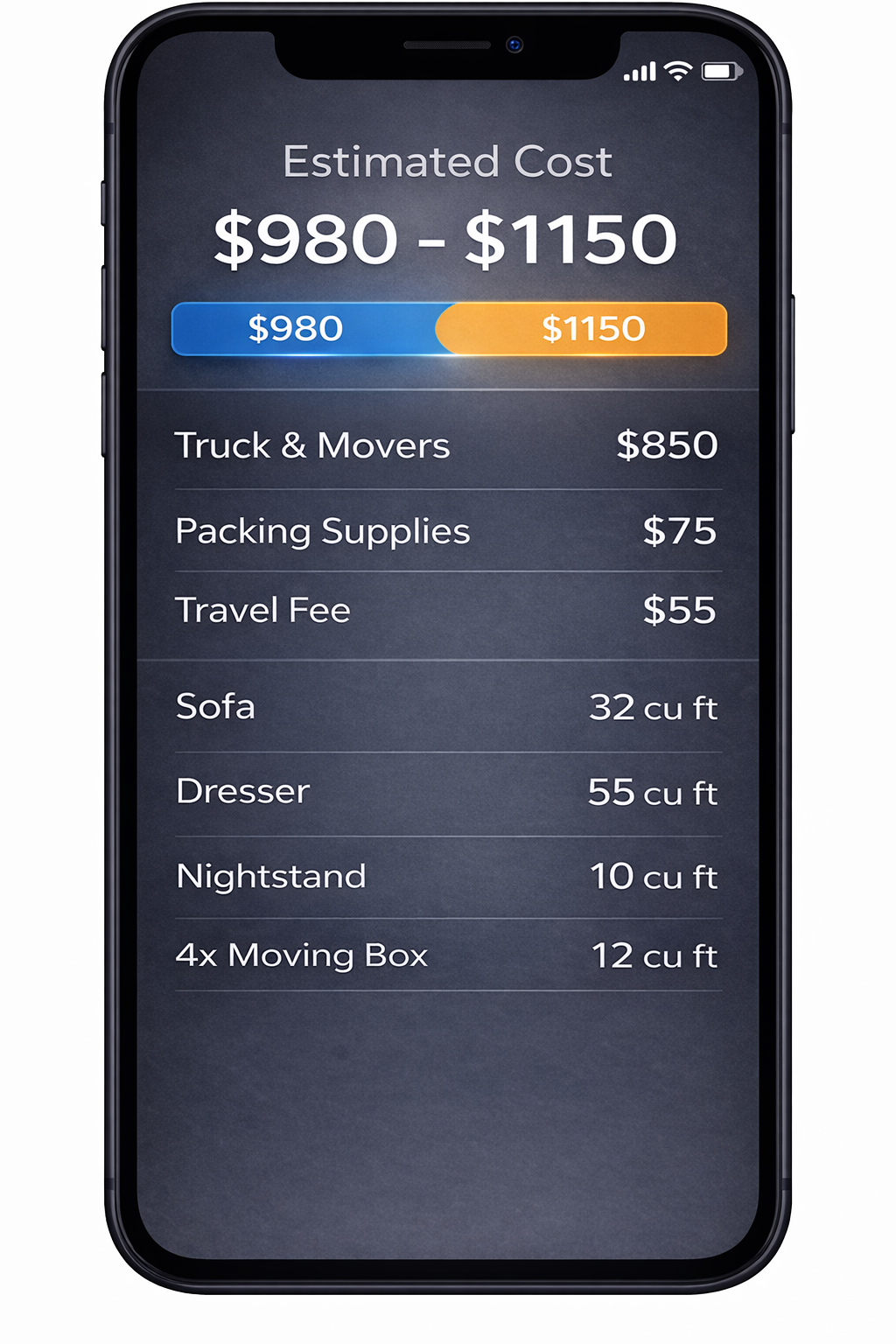
We identify your items and calculate volume for a clearer estimate.
3. Compare Multiple Quotes
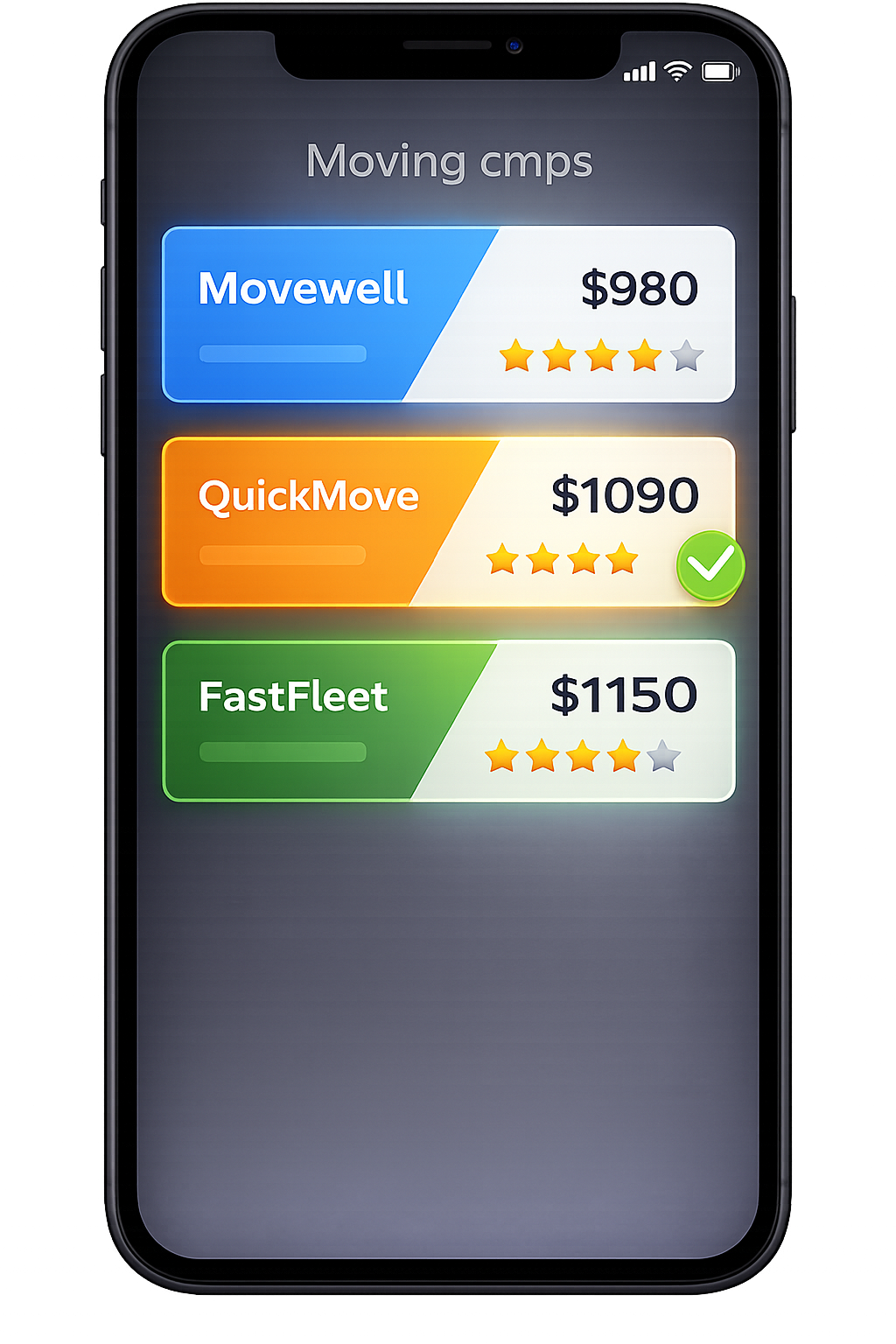
Compare mover quotes for New York, NY from the same scanned inventory.
Frequently Asked Questions
How many moving quotes should I compare for a typical New York apartment move?
Many New Yorkers find that comparing 3–5 quotes is enough to see a realistic price range for their move. On MoveCost, you can send your inventory and building details once and then review several quotes that are all based on the same information. For more complex situations—like a multi-bedroom move from a Brooklyn brownstone to a high-rise in Queens—it can be helpful to look at a few extra quotes so you can see different approaches to parking, stair carries, and timing around elevator reservations.
Will the AI inventory scan really make my moving quote more accurate in NYC?
It helps movers get closer to the true scope of your New York move because they can see the size and type of items you’re taking, not just a text description. In a city where buildings vary from 5th-floor walk-ups in Harlem to high-rises in Long Island City, the combination of visual inventory and building notes gives movers more to work with than a short phone call. That usually leads to quotes that better reflect how many movers, how big a truck, and how much time your move will actually take within your building rules.
Can I compare quotes for both local NYC moves and long-distance moves leaving New York?
Yes. MoveCost supports moves that start or end in New York, whether you’re going a few neighborhoods away or to another state. When you enter your inventory and addresses, you can see quotes from movers focused on local NYC work as well as companies that handle regional or long-distance routes. That lets you compare different pricing structures—hourly, flat-rate, or volume-based—on the same underlying move details.
How do NYC movers on your platform handle building requirements like COIs and elevator reservations?
When you request quotes, you can specify if your building needs a Certificate of Insurance, has a freight elevator that must be reserved, or enforces strict move-in hours. Movers see those notes alongside your inventory and can respond in their quotes with how they typically handle management paperwork and scheduling. You can prioritize movers who clearly acknowledge your COI and elevator needs in their quote details so there are fewer surprises when you coordinate with your super or front desk.
How can I avoid bait-and-switch moving quotes in New York?
One way is to make sure every mover is quoting based on the same information. MoveCost helps by giving movers your AI-generated inventory and building details up front so they’re not estimating from a one-line description. You can then compare how specific each quote is about what’s included—like stairs, long carries, and travel time—and ask follow-up questions through the platform before booking. Quotes that clearly state their assumptions are generally easier to hold to than vague estimates that leave out key building or access details.
What if I’m not sure of my exact move date because I’m waiting on a lease or board approval?
That’s common in New York, especially for co-op and condo moves. You can still use MoveCost to scan your apartment, save your inventory, and collect quotes for a target week or date range. Many movers will show how pricing or availability changes for different days. Once your lease or board approval is finalized, you can update your date in the platform and coordinate with the mover you prefer instead of starting your quote search from scratch.
Do I need an in-person visit to get a moving quote in New York City?
In-person visits are not always required, especially for small and mid-sized NYC apartments. The AI scan and detailed building questions are often enough for movers to provide a meaningful quote. For unusually large or complex moves—such as entire brownstones or mixed-use spaces—some movers may still request a walk-through, but the information you’ve already collected through MoveCost can shorten that process and make the follow-up quote easier to compare with the others in your dashboard.
Can I reuse my inventory if my New York move gets delayed or plans change?
Yes. Once you’ve scanned your apartment or built an item list, you can update it and reuse it for new quote requests if your timing, destination, or building changes. That is particularly useful in New York when closings, lease start dates, or board approvals move around—you don’t have to rebuild everything from scratch just to see how new dates or addresses affect your quotes.