
Get a Clear, Upfront Moving Estimate in Seattle – Without a Pushy Sales Visit
Walk through your Seattle home with your phone, let AI build your inventory, and compare real quotes from movers that actually work in your neighborhood and understand our hills, rain, and tight streets.

Seattle Moving Estimate with AI | Local Examples, Weather & Parking Factors | MoveCost.ai
A Moving Estimate Built for How Seattle Actually Moves
From Capitol Hill studios to West Seattle townhomes, your estimate reflects real Seattle layout and access challenges. In Seattle, no two moves look the same. You might be: • Leaving a walk-up in Capitol Hill with tight stairs and no loading zone • Moving from a Ballard townhome with alley access and limited truck space • Relocating from Queen Anne to West Seattle, or heading out of state entirely A quick guess over the phone usually doesn’t capture those details. MoveCost uses AI to turn a short walkthrough of your home into a precise inventory and moving volume estimate. Instead of reading off every item to a salesperson, you simply scan your rooms with your phone. Our system detects furniture and boxes, so Seattle movers can quote based on what you actually own and where you live. You’ll then see estimates from movers that regularly handle Seattle neighborhoods—people who understand things like Fremont bridge openings, steep First Hill streets, South Lake Union loading docks, and game-day traffic around downtown. By tying your moving estimate directly to Seattle’s buildings, weather, and streets, MoveCost helps reduce vague “ballpark” numbers and gives you a clearer sense of how complex your move really is. Local-first: Estimates tuned to how Seattle buildings, streets, and parking actually work. Fast: Go from scan to initial moving estimate in as little as the same day. Transparent: See what’s included in each quote before you decide.
How AI Scanning Turns Your Seattle Home into a Reliable Moving Estimate
Walk, scan, review, compare — all from your phone. Traditional moving estimates depend on how well you can describe your stuff over the phone. In a typical Seattle setup—with storage cages, balcony gear, and shared spaces—that’s easy to underestimate. MoveCost replaces guesswork with a guided scan: 1. Scan your rooms with your phone Walk through each room, balcony, garage, or storage area while the app records. 2. AI detects your items automatically Couches, beds, desks, dressers, TVs, bookcases, some boxes, and more are recognized and added to your digital inventory. 3. You review and fine-tune Add anything the scan missed (like gear in a Wallingford basement or U District attic) and adjust box counts with a few taps. 4. We estimate your moving volume and effort Behind the scenes, MoveCost converts your inventory into an estimated volume and effort, which movers can use to price more accurately for Seattle’s conditions. 5. Request moving estimates instantly Send your inventory to multiple Seattle movers at once instead of repeating the same information over and over. Studios & 1-Bedroom Apartments Family Apartments & Townhomes Seattle to Out-of-State Moves
Virtual Estimates That Account for Seattle’s Elevators, Parking, and Weather
Your moving estimate isn’t just about what you own — it’s how movers can get to it. In Seattle, access can matter as much as inventory. A narrow Green Lake street or a freight elevator window in Belltown can change how long a move takes. During the MoveCost estimate flow, you’ll add context that generic quote forms usually ignore: • Floor and elevator details – Are you on a 4th-floor walk-up in Capitol Hill or in a South Lake Union building with a freight elevator reservation? • Parking reality – Can a truck park right outside, or will it be a long walk from a side street or garage? Is there a loading dock that must be shared with deliveries? • Building rules – Any move-in windows, COI requirements, or quiet hours your HOA or property manager enforces? • Neighborhood quirks – Busy streets, hills, or tricky turns common in areas like Queen Anne, Magnolia, or downtown. These access notes are shared with movers along with your AI inventory so they can factor in: • Elevator vs. stairs (and how many flights) • Long carries from truck to unit • Loading docks or garages vs. street parking • Typical traffic patterns (rush hour on I‑5 or SR‑99, evening congestion around SLU) • Seasonal weather like winter rain, slick hills, or early sunsets Seattle movers know that a third-floor walk-up in Ballard is very different from a ground-floor duplex in West Seattle. With MoveCost, your estimate reflects those differences before moving day. More realistic time estimates for complex Seattle buildings. Fewer last-minute access issues when the truck arrives. Better-aligned expectations between you and your chosen mover.
Example Seattle Moving Estimates Based on Real-World Conditions
See how hills, rain, elevators, and distance can change the time and effort behind your estimate. MoveCost focuses on how complex your move is: how many items you have, how far they need to go, and how hard they are to access. Below are example scenarios to show how Seattle-specific details influence a moving estimate. These are not quotes, but they mirror patterns we commonly see when movers price local jobs. Example 1: South Lake Union Apartment to Fremont Apartment • 1-bedroom apartment in South Lake Union, mid-rise building with a freight elevator • Destination: 1-bedroom in Fremont, small parking lot with a short walk to the building • Inventory: Typical 1-bedroom setup (bed, sofa, small dining table, TV stand, 20–30 boxes, bikes) • Seattle factors that can affect the estimate: • Need to reserve SLU freight elevator for a fixed 2–3 hour window • Midday congestion on Westlake/Fremont Ave or around the Fremont Bridge • Shared loading area with delivery trucks In MoveCost, you’d capture this by scanning your apartment, adding bikes and storage items, then noting the elevator reservation, loading dock, and target move window. Movers may estimate a relatively short drive but build in buffer for elevator timing and mid-day traffic. Example 2: Capitol Hill Walk-Up to Queen Anne Hill Apartment • Origin: 3rd-floor walk-up in Capitol Hill, no elevator • Destination: 2nd-floor apartment on Queen Anne, partial hill and tight street parking • Inventory: 2-bedroom equivalent (beds, sectional sofa, dining set, office desk & chair, 30–40 boxes) • Seattle factors that can affect the estimate: • Multiple flights of stairs at origin and destination • Narrow, often full street parking on Queen Anne requiring longer carries • Steeper streets that can slow careful loading/unloading, especially in rain In MoveCost, you’d call out both sets of stairs, the likely need for a smaller truck or creative parking on Queen Anne, and your preferred time of day. Movers may weigh the job more heavily on labor time rather than distance because the drive is short but the carries and stairs are demanding. Example 3: Ballard Townhome to West Seattle House • Origin: 3-story Ballard townhome with alley access • Destination: Single-family home in West Seattle with a driveway and a couple of exterior steps • Inventory: 3-bedroom equivalent (bedrooms plus home office, patio furniture, garage tools, 50–60 boxes) • Seattle factors that can affect the estimate: • Multiple internal flights of stairs in the townhome • Tight alley access in Ballard that may require a smaller truck or extra walking distance • Variable traffic on the West Seattle Bridge and around port areas • Rain and wet surfaces during fall/winter months In MoveCost, your scan would capture items across all three levels plus the garage and outdoor spaces. Access notes would highlight alley constraints and the easier parking at the destination. Movers may budget extra time on the Ballard side while treating the West Seattle unloading as more straightforward. When you complete your own scan, your estimate will reflect your exact inventory and access notes instead of trying to fit you into a generic Seattle average. Understand how Seattle’s layout changes effort and timing. See why two short-distance moves can have very different estimates. Use examples to sense-check your own Seattle moving plan.
Compare Real Quotes from Seattle Movers in One Dashboard
No more repeating your inventory on five different phone calls. Once your inventory and access notes are set, MoveCost lets you request estimates from multiple movers that serve the Seattle area. Instead of keeping track of scattered emails and voicemails, everything comes back to a single view. For each estimate, you can review: • How pricing works – Hourly vs. flat-rate for local moves, or volume-based for longer routes. • What’s included – Labor only vs. options that also handle basic packing. • Scheduling fit – Available dates, start-time windows, and flexibility around end-of-month crunch periods. • Service details – Whether they support apartment moves, townhomes, or longer routes out of the region. If a quote looks unusually low or high, you can go back into your inventory, confirm items, or clarify details like a storage unit or tougher parking situation. That way, the estimate you choose is based on a realistic picture of your Seattle move. Local Seattle Moves Greater Seattle Area Out-of-Region & Long Distance
Dial In Your Inventory to Reduce Moving-Day Surprises
A detailed, honest inventory is your best protection against unexpected costs. Most frustrating moving-day surprises come from two things: undercounted items and overlooked access difficulties. In Seattle, a steep Queen Anne street or a long walk from a Magnolia driveway can change how long your move takes. MoveCost helps you prevent that by making it easy to: • Add or remove items as you sell, donate, or buy furniture • Flag fragile or oversized pieces like large sectionals, glass tables, or plants • Include items stored outside your main unit, like storage lockers, bike rooms, or shared garages During the estimate flow, we’ll also prompt you to think about details people often forget until the last minute: • Loading dock or freight elevator windows • HOA or building paperwork requirements near the waterfront or downtown • Regular congestion from delivery trucks or restaurant traffic on your block By keeping your inventory and access notes up to date, you give movers the information they need to stay closer to the estimate you received—whether you’re moving a few blocks in Seattle or heading across the Cascades. Lower risk of last-minute add-ons for stairs or long walks. Easier planning for time off work, cleaners, and elevator reservations. A moving estimate you can actually budget around.
When to Get Your Seattle Moving Estimate (and How to Use It)
Use your MoveCost estimate as the backbone of your move plan. Seattle’s rental cycle and traffic patterns make timing important. End-of-month dates and summer weekends book up quickly, especially in popular neighborhoods and tech-heavy areas around South Lake Union and the Eastside. Here’s a simple timeline many Seattle movers follow: • Local apartment or small home moves – Start your AI scan and collect estimates about 3–4 weeks before your preferred move date. • Larger or more complex moves – Give yourself 4–6 weeks, especially if you have multiple floors, tight access, or several storage areas. • Long-distance moves out of the region – Plan on 6–8 weeks so you can coordinate job start dates, schools, flights, and housing. Once you have your MoveCost estimate, you can: • Confirm elevator and loading rules with both origin and destination buildings • Ask movers about the best start time to avoid heavy traffic (for example, timing around I‑5, SR‑99, or the West Seattle Bridge rush hours) • Use your inventory to plan packing supplies instead of guessing box counts • Update your inventory if you sell or donate big items, then refresh your estimates Whether you’re leaving a shared house in the U District, downsizing from a West Seattle home, or moving into a new building in South Lake Union for a tech job, a solid estimate early on makes the rest of your planning much easier. Avoid last-minute scrambles for elevator slots and parking. Align your move with work, school, and travel schedules. Use one accurate inventory across movers, landlords, and helpers.
Why Seattle Renters and Homeowners Use MoveCost for Moving Estimates
Designed for busy people who want clarity before committing to a mover. MoveCost brings together AI-based home scanning, moving cost estimation, and quote comparison into one simple experience built for Seattle. Instead of juggling calls, emails, and rough guesses, you get: • A detailed digital inventory based on an AI room scan • Moving volume and effort estimates that account for Seattle-specific access • Multiple quotes from movers who work in and around the city You stay in control the entire time — no pushy in-home visits, and no obligation to book after you see your estimates. Clarity: Understand what drives your Seattle moving estimate before you commit. Control: Adjust your inventory and compare options at your own pace. Convenience: Skip sales calls and in-person walkthroughs while still getting detailed estimates.
How It Works
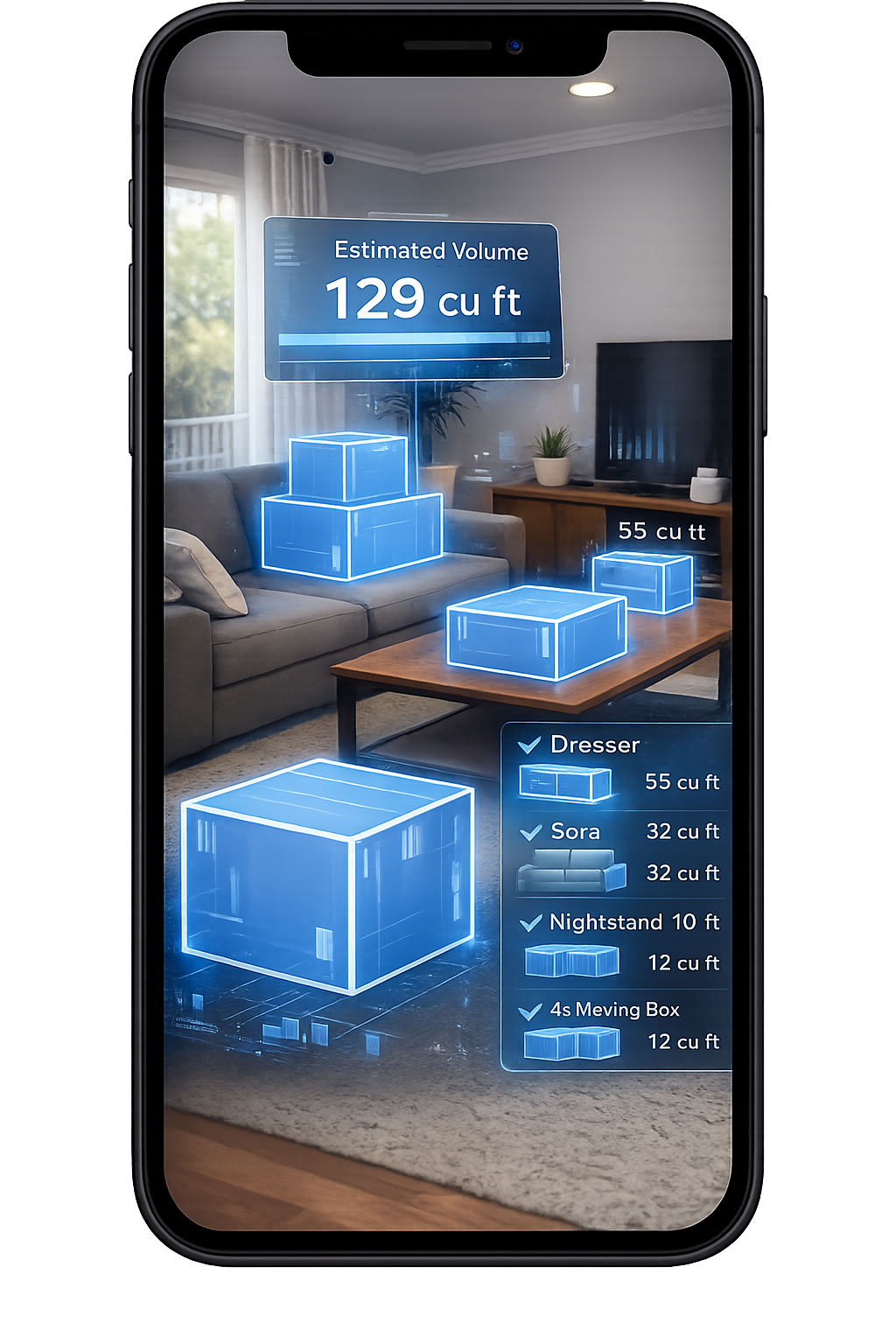
1. Scan Your Room With Your Phone
Walk around your space and scan your items in seconds.
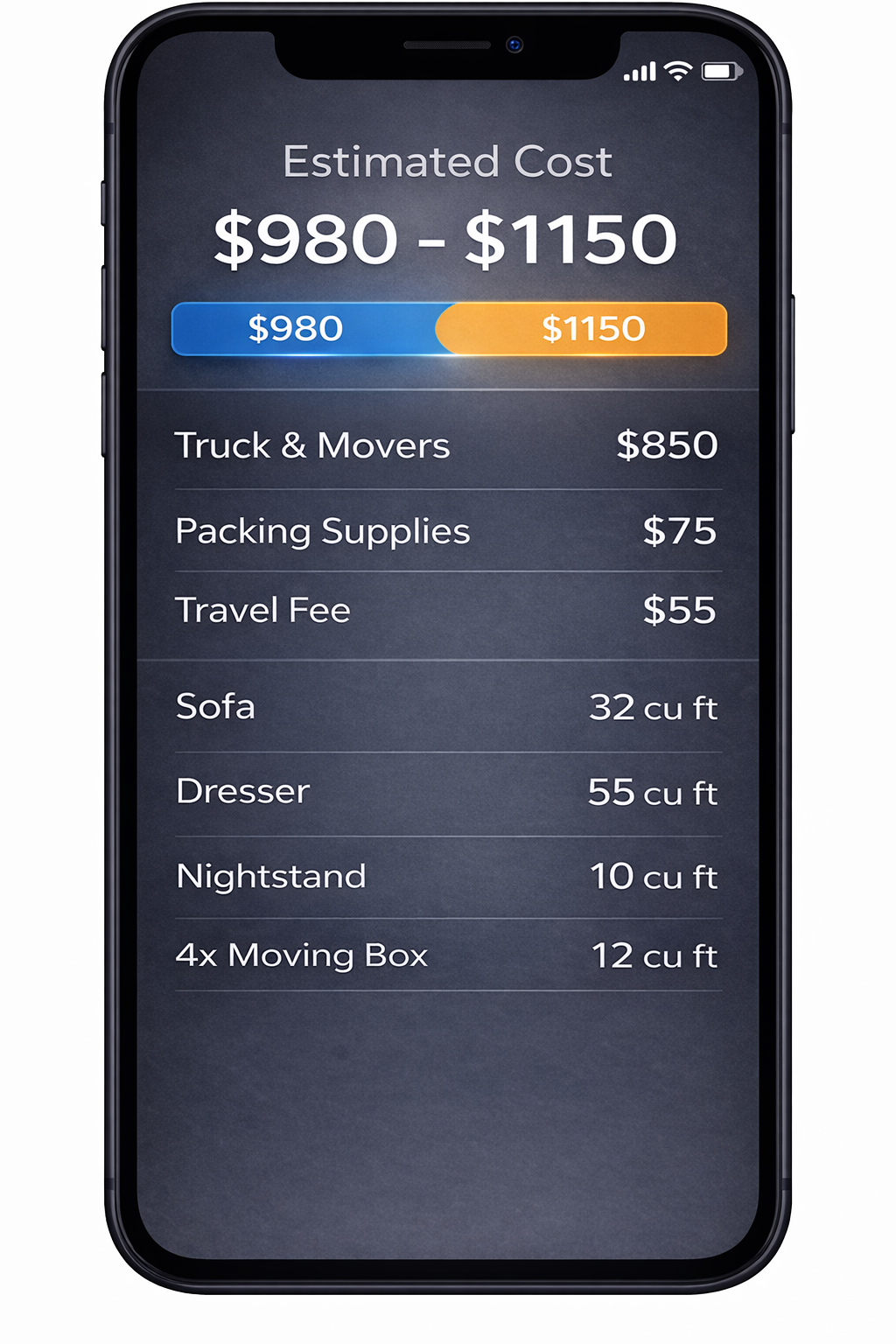
2. AI Detects Your Items
We identify your items and calculate volume for a clearer estimate.
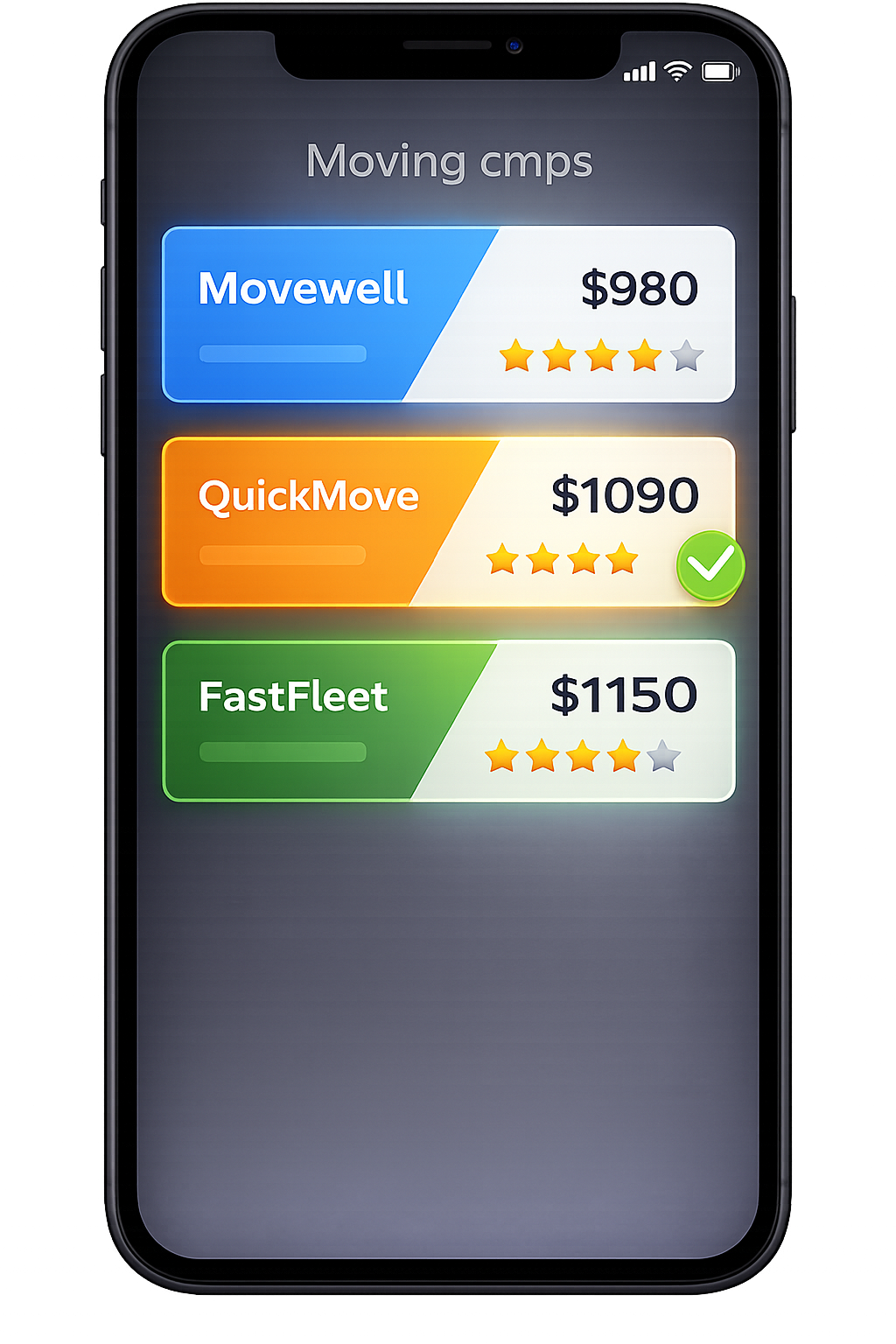
3. Compare Multiple Quotes
Compare verified mover quotes from the same scanned inventory.
Frequently Asked Questions
How accurate is an AI-based moving estimate for a typical Seattle apartment?
For most Seattle apartments and smaller homes, AI inventory scanning is often more accurate than a quick phone quote because it forces you to walk through every room, balcony, storage cage, and shared space. The final price still depends on access and traffic on move day, so it’s important to include details like slow elevators, long walks from the loading zone, or limited street parking in neighborhoods such as Capitol Hill, Belltown, and Ballard. When your inventory and access notes are complete, Seattle movers can usually quote within a tighter range of what you’ll actually pay.
How do Seattle-specific factors like hills, rain, and tight streets show up in my moving estimate?
Seattle’s hills, frequent light rain, and narrow side streets mostly affect how long a move takes, not how many items you have. In MoveCost, you call this out by noting stairs, steep driveways, long outdoor walks, and tricky parking. Movers use that context along with your AI inventory to decide how many movers to send and how much time to allow. A short-distance move up or down Queen Anne Hill, for example, can still be estimated as a higher-effort job than a flat move with driveway parking in parts of West Seattle.
Can MoveCost help if my building in Seattle requires a freight elevator reservation or certificate of insurance?
Yes. During your MoveCost estimate, you can note that your Seattle building requires a freight elevator reservation or certificate of insurance (COI). After you compare quotes and choose a mover, you can share your building’s rules and contacts so they can send the required paperwork and book the freight elevator window. This is common in mid-rise and high-rise buildings in areas like South Lake Union, downtown, and parts of Capitol Hill, so it’s smart to confirm requirements with your property manager soon after you receive your estimate.
Do weekend moving estimates in Seattle differ from weekday estimates?
Many Seattle movers consider both demand and traffic when they build estimates. Weekends often have fewer commuters on I‑5 and SR‑99 but can be busier near event venues and popular neighborhoods. Weekdays may come with heavier rush-hour congestion but can be easier for scheduling freight elevators and loading docks in office-heavy areas like South Lake Union. When you use MoveCost, you can request estimates for different days or time windows and see how movers respond based on their own calendars and typical demand.
Will Seattle rain or winter weather affect my moving estimate?
MoveCost estimates assume typical Seattle conditions, which often include light rain and damp sidewalks. However, very heavy rain, slick hills, or unusually bad weather can slow moves down, especially if you have outdoor stairs, steep driveways, or long uncovered walks common in neighborhoods like Queen Anne, Magnolia, and West Seattle. Having a detailed AI inventory and clear access notes helps movers build realistic time expectations, but extreme weather can still affect the actual time spent on move day.
How does MoveCost work if I’m moving from Seattle to another state?
For long-distance or out-of-state moves, you’ll create your AI inventory the same way: walking through your Seattle home with your phone. Then you’ll add your destination city and any access details you know about the new place—such as stairs, elevators, or parking. Movers that handle routes from the Seattle area can use your inventory to estimate volume and effort, then layer in travel and fuel. If you don’t yet know much about access at your new home, you can still get an initial estimate and update it later as you learn more.
What if my inventory changes after I receive my Seattle moving estimate?
It’s common for plans to change: you might sell furniture, buy a new piece, or discover extra items in a storage locker. With MoveCost, you can log back in, add or remove items, adjust box counts, and update special notes. Once your inventory is updated, you can ask for refreshed estimates or share the revised list with the mover you’ve tentatively chosen. Small changes like a few extra boxes usually don’t move the price much, but adding or removing large pieces—like a sectional, king bed, or shelving—can, so keeping your list current is the best way to reduce surprises on moving day.
When should Seattle tech workers or remote workers start their moving estimate?
If you’re timing a move around a new role at a Seattle or Eastside tech company, it helps to start your MoveCost estimate as soon as you know your approximate start date. Many people begin scanning their home and collecting estimates 4–8 weeks before a relocation, which leaves room to align move day with office start dates, onboarding schedules, and any travel. Because you can reuse your MoveCost inventory across multiple movers, you won’t have to repeat details every time you explore a different moving option.
Can I use MoveCost if I’m just trying to budget for a Seattle move and haven’t chosen dates yet?
Yes. You can complete an AI scan, build your inventory, and note your current building’s access even if your move date is flexible. That gives you a baseline moving estimate so you can understand how complex your Seattle move is likely to be. As your timing firms up, you can update your preferred windows or destinations and request fresh estimates without starting from scratch.