
See Your Moving Company Cost in Seattle in Minutes
Scan your home with AI, get an instant moving cost estimate for Seattle, and compare quotes from local movers side by side—no calls, no long forms.

moving company cost in Seattle, WA
Seattle moving companies usually charge by the hour for local moves. Your final cost comes down to three things: crew size, how long the job takes, and how easy (or difficult) your buildings are. Common patterns for local Seattle moves: - Small apartment (studio or 1‑bedroom): often a 2‑mover crew + truck for about 3–5 hours - Larger apartment or small house: often a 3‑mover crew + truck for about 5–8 hours - Bigger homes or townhouses with tricky stairs and long walks: 3–4 movers and most of the day Neighborhood details matter. A walk‑up in Capitol Hill, tight streets in Queen Anne, or long hallways in South Lake Union can all add time. That’s why guessing from a single hourly rate isn’t enough—you need a realistic estimate of how long your specific move will take. MoveCost helps you move beyond rough ranges. Scan your home with AI, send that detailed inventory to multiple Seattle movers, and compare how each company prices the exact same move. You see not just the hourly rate, but each mover’s expected hours and total estimated cost. Get a local‑specific cost range based on your actual items See how access and distance change your final price Avoid underestimating how long your move will really take
Instead of filling out long forms or trying to list every single item, MoveCost uses AI to detect your furniture and estimate moving volume. That inventory powers more accurate price estimates from movers across Seattle. No long phone calls or in‑home walkthroughs just to get a price Consistent inventory sent to every mover for fair, apples‑to‑apples comparisons Faster, clearer estimates tailored to your Seattle addresses 1. Scan Your Seattle Home 2. AI Detects Items & Volume 3. Compare Quotes from Movers
Labor is usually the biggest part of your moving company cost in Seattle. Most movers charge an hourly rate that includes the crew and sometimes the truck. The more complex your move, the more hours you’ll pay for. Common factors that stretch the clock in Seattle: - **Traffic and parking logistics** – Circling the block in Capitol Hill, navigating construction detours in Ballard, or crawling along I‑5 can all add billable time. - **Building rules and elevator waits** – Many apartments in South Lake Union, downtown, and the U‑District require elevator reservations, move‑in windows, or loading dock sign‑ins. - **Stairs and long walks** – Older walk‑ups in Queen Anne or First Hill, steep exterior stairs in West Seattle, and long hallways from the truck to your unit all slow the crew down. With MoveCost, you can show these details up front. As you scan your place, add quick notes about stairs, elevators, loading docks, and parking options. Movers use that information to set more realistic labor estimates, reducing the chance of surprise hours on moving day. Understand why similar moves can have different labor costs Give movers enough detail to quote more accurately Reduce the risk of your final bill exceeding the estimate
Most Seattle movers either include the truck in their hourly rate or charge a separate travel fee to cover drive time and fuel. The distance between your old and new address—and how easy it is to park—shapes that part of your bill. Examples: - Short hops like Green Lake to Wallingford may have modest travel time. - Cross‑lake moves, like Fremont to Bellevue, often involve higher travel charges. - Longer trips down the I‑5 corridor, such as Seattle to Tacoma or Kent, add distance and potential traffic delays. Parking and access add another layer. Narrow streets in Capitol Hill, one‑way downtown blocks, and older neighborhoods like Madison Valley can limit where a truck can legally and safely park. If the crew has to park farther away, walk your items longer distances, or wait for a space to open up, your move takes longer. On MoveCost, you enter both pickup and drop‑off locations and can add notes like “tight alley access,” “steep driveway,” or “must use loading dock on 3rd Ave.” Movers see those details when they prepare your estimate, so their truck and travel charges reflect real Seattle conditions instead of a generic mileage guess. See how different routes and cities around Seattle affect price Flag parking challenges before movers arrive Get more realistic travel and truck cost estimates
Beyond the core move, Seattle movers offer optional services that can save time or protect your belongings—but they also add to your total cost. Common add‑ons in the Seattle area include: - **Packing services** – Charged by the hour plus materials. Helpful for kitchens, books, and fragile items in condos and apartments with strict move‑in rules. - **Boxes and materials** – Cardboard boxes, wardrobe boxes, tape, packing paper, mattress bags, TV boxes, and floor protection. - **Disassembly and reassembly** – Beds, dining tables, sectionals, and other large furniture that won’t fit through doors or elevators in one piece. - **Special handling** – Oversized or heavy items that require extra planning or equipment. - **Long carry scenarios** – When the truck can’t park close and movers need to carry items farther. With MoveCost, you can choose which services you actually want and indicate what you’ll handle yourself. During your AI scan, mark items that need special care or disassembly, and note any preferences to DIY packing. Movers then build estimates around your real plan instead of a one‑size‑fits‑all package. Understand which extras you truly need for your move Avoid surprise line items for packing or materials Balance budget vs. convenience for your specific situation
A short move from South Lake Union to Shoreline and a full relocation from Seattle to another state are priced very differently. **Local Seattle moves** - Typically charged by the hour for crew + truck - Time is driven by loading, driving, access, and unloading within the metro area **Long‑distance or out‑of‑state moves** - Often priced based on estimated weight or volume and the distance between cities - Access at both ends (stairs, elevators, steep driveways) still affects labor and total cost The challenge is that most people don’t know how much their belongings weigh or how many cubic feet they’ll occupy. MoveCost’s AI scanner solves that by building a detailed inventory of your furniture and boxes, then using that data to estimate volume. Movers can then price both local and long‑distance options from the same source of truth. On the platform you can: - Request local and long‑distance quotes for the same inventory - See different pricing structures—flat rate, binding estimate, or hourly with minimums - Compare which movers are a better fit for a short in‑city move vs. a longer route out of Seattle That makes it easier to decide whether to stay nearby or relocate farther away, with clear cost expectations either way. See how costs change if you move across town vs. out of state Use one inventory to collect multiple types of quotes Choose the route and mover that fits your budget and timeline
Once you’ve scanned your Seattle home and confirmed your inventory, MoveCost sends that data to multiple professional movers. Each company responds with its own estimate, based on the same list of items and access notes. You can then review: - Estimated total cost for your move - How many movers each company recommends - How many hours they expect the job to take - What’s included (truck, basic protection, packing help, etc.) Comparing these side by side helps you spot estimates that assume unrealistically fast times or ignore stairs, tight parking, or elevator scheduling. Instead of focusing only on the lowest number, you can choose the estimate that best reflects the real logistics of your Seattle move. See different movers’ assumptions about time and crew size Catch estimates that don’t match your building conditions Choose a mover with pricing that aligns with your actual move
How It Works
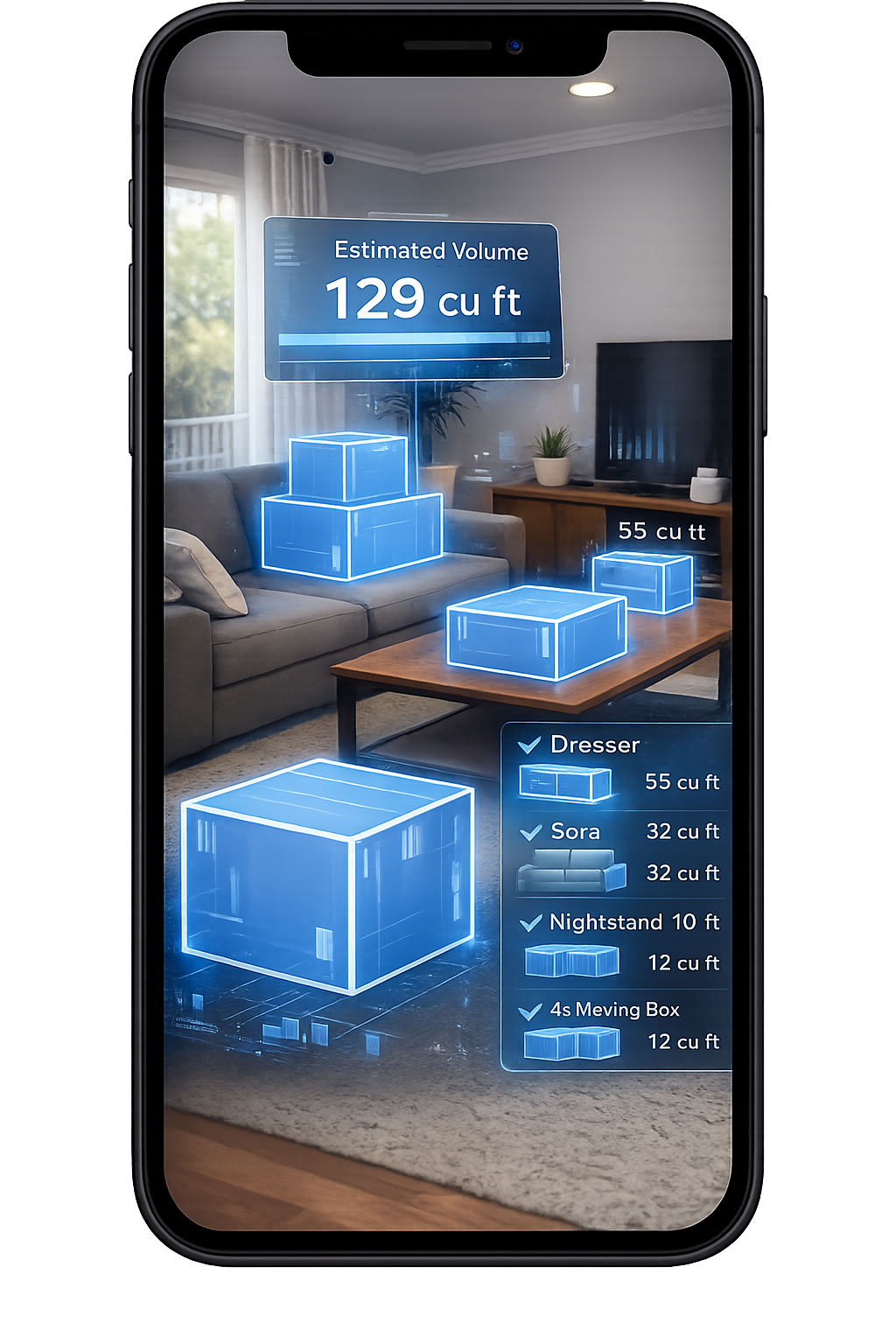
1. Scan Your Room With Your Phone
Walk around your space and scan your items in seconds.
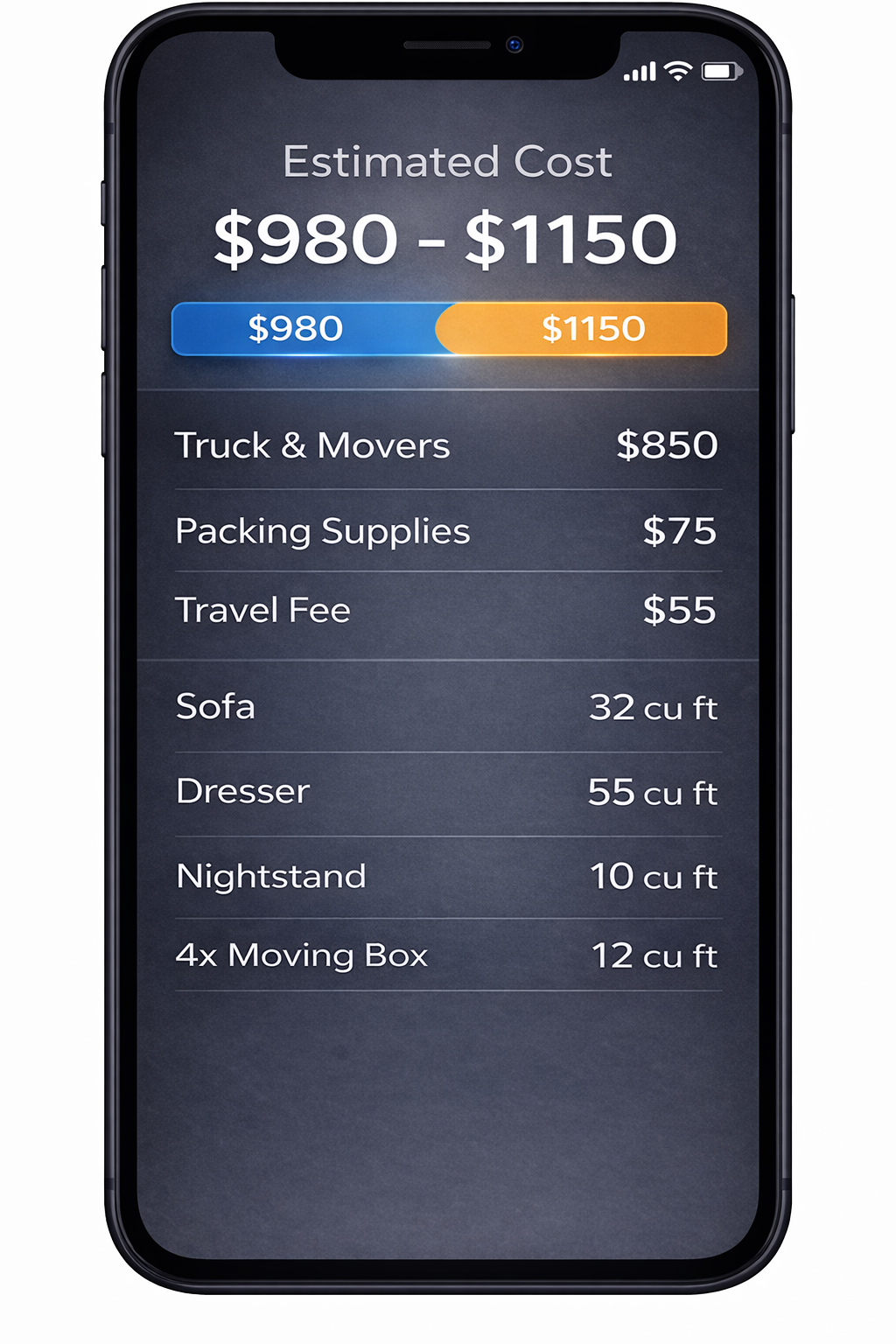
2. AI Detects Your Items
We identify your items and calculate volume for a clearer estimate.
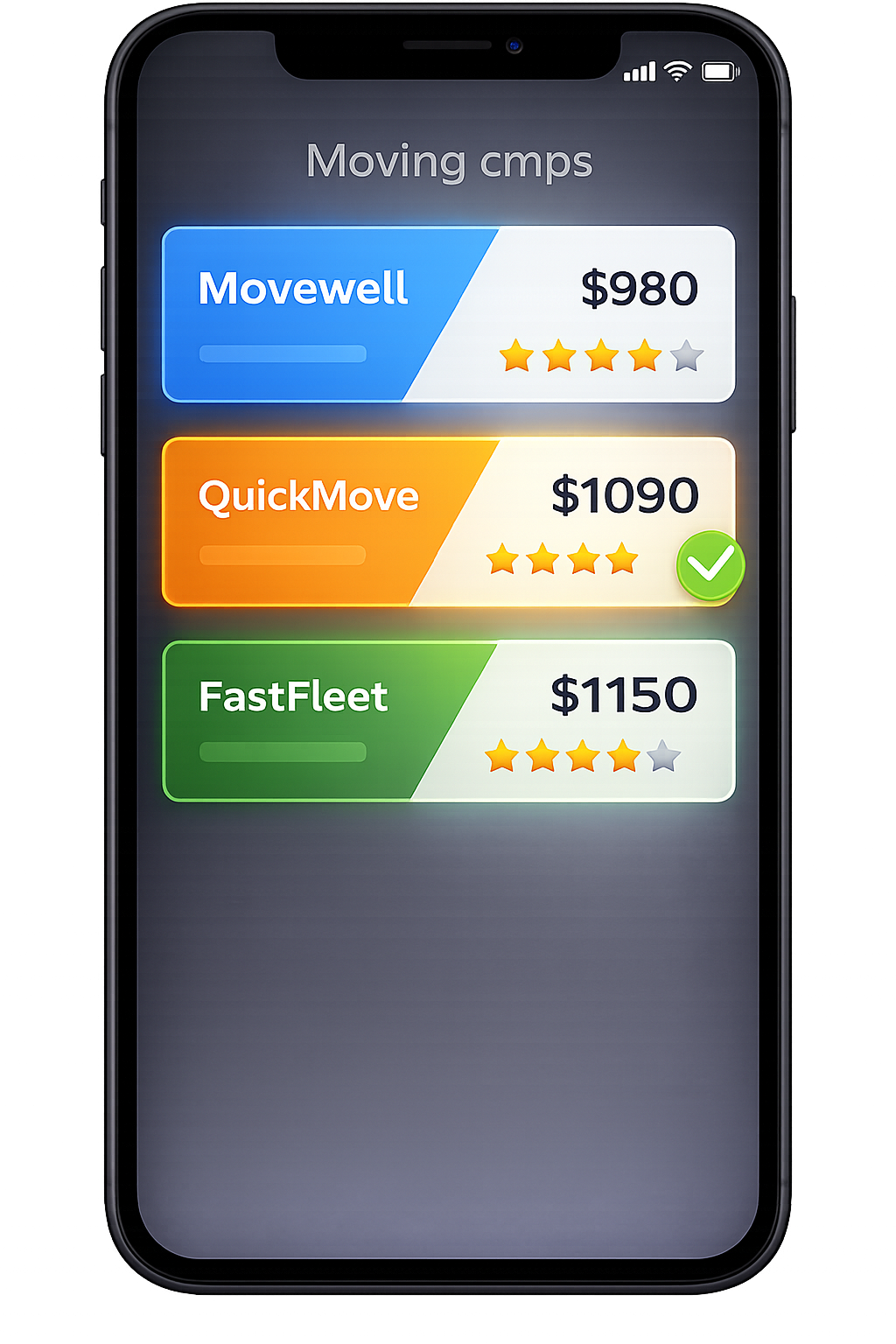
3. Compare Multiple Quotes
Compare mover quotes for Seattle, WA from the same scanned inventory.
Frequently Asked Questions
What’s a realistic price range for a small apartment move within Seattle?
For a typical studio or one‑bedroom move within the city—such as Capitol Hill to Ballard or Fremont to South Lake Union—many people end up somewhere in the mid‑hundreds to around a thousand dollars with professional movers. That often covers a 2‑ or 3‑person crew, a truck, several hours of work, and a travel fee. Your actual cost depends on how much you own, how well you’re packed, how easy it is to park, and whether you have stairs or long walks from the truck. Using MoveCost’s AI inventory scan and quote comparison, you can see where your specific move falls in that range before you book anyone.
How do stairs and steep driveways in Seattle affect moving company cost?
Most Seattle movers don’t charge per stair, but they absolutely factor access into how long they expect your move to take. Third‑floor walk‑ups in the U‑District or Queen Anne, steep driveways in West Seattle, and long outside walks from the truck all slow crews down—especially with heavy items. Some movers may also add a long‑carry fee if the distance from truck to door exceeds a certain threshold. When you use MoveCost, you can show these access challenges in your AI scan and add notes like “three flights of stairs” or “steep driveway,” so movers build that extra time into the estimate instead of it becoming a surprise charge later.
How much does Seattle traffic and parking actually change my moving cost?
Seattle traffic and parking can significantly affect your moving company cost because most local moves are billed by the hour. Time spent circling for a legal spot in Capitol Hill, navigating construction in Ballard, or crawling along I‑5 through downtown can all add to the clock. Tight or limited parking may force movers to park farther away, turning a short move into a longer job due to extra walking time. With MoveCost, you enter both addresses and can add notes about parking, alleys, loading docks, and restrictions, so movers can plan realistically and price accordingly.
Can I lower my moving company cost in Seattle by packing myself?
Yes. Packing yourself is one of the simplest ways to reduce moving costs in Seattle, where hourly labor is a major part of the bill. Having everything boxed, labeled, and ready when movers arrive can shorten your move by hours. Just keep in mind that buildings downtown and in South Lake Union often have fixed elevator windows, so poor packing can delay things and cause issues with building management. On MoveCost, you can indicate which rooms or items you want professional packing for and which you’ll handle yourself, then see how each mover adjusts their estimate.
How does MoveCost help me avoid surprise moving charges on my Seattle move?
MoveCost focuses on giving movers a clear, detailed picture of your real situation before they quote. Instead of a quick phone call description, you scan your Seattle home with our AI tool to capture your furniture, boxes, stairs, elevators, and entryways. That inventory goes to multiple movers, who then build estimates around the same data. You can see how each company handles travel time, parking, access, and optional services like packing or furniture assembly. Comparing these estimates side by side makes it easier to reject quotes that ignore obvious challenges in your building or neighborhood, helping you avoid unpleasant surprises on moving day.