
See Real Moving Company Costs in New York, NY
Scan your New York apartment with AI, estimate moving costs instantly, and compare quotes from movers who know NYC buildings, stairs, and parking.

moving company cost in New York, NY
If you’ve tried to figure out moving company cost in New York, you’ve seen everything from bargain "specials" to high hourly rates. The real cost usually lands in the middle and depends heavily on your building, your stuff, and the date you move. For a typical local move within the five boroughs, many licensed crews charge by the hour for a team plus a truck. Prices climb based on how long the job takes, how far movers walk from the truck to your door, and whether you’re moving on a peak weekend or a quieter weekday. A compact one-bedroom in a doorman building with a good service elevator prices very differently from a fifth-floor walk-up with tight stairs and no loading zone. In many neighborhoods, simply finding legal parking can add real time—and cost. MoveCost is built specifically for this kind of city reality. Instead of guessing, you scan your home with AI, automatically build an inventory, and see quotes from New York movers who understand co-op rules, narrow hallways, and alternate-side parking. You’re not comparing vague “starting at” prices—you’re comparing estimates tied to your actual move in your actual neighborhood. Understand realistic New York moving costs before you book Avoid underestimates caused by generic online calculators See how different movers interpret the exact same move details
Within New York City, most moving companies combine labor and truck time into one estimate. Labor is often billed per crew, not per individual mover, with a minimum number of hours. Truck and travel fees usually cover the vehicle, fuel, tolls between boroughs, and standard moving equipment. Some companies roll everything into a single hourly rate; others list separate truck or “travel” charges for the trip from their warehouse to your building and back. Parking and traffic are major variables. Tight streets, bus lanes, bike lanes, and limited loading zones can force movers to circle for a spot or park farther away, turning every extra minute into more labor cost—especially around busy hubs like Midtown, Downtown Brooklyn, or near hospitals and schools. On MoveCost, you can see how different New York movers structure these charges before you decide. We collect details on your building type, elevator access, and typical parking on your block so movers can estimate realistic labor and truck time up front. Spot which quotes are underestimating labor or travel Choose movers whose pricing structure matches your priorities Reduce the risk of your final bill drifting away from the estimate Total hours the crew is on your job, influenced by stairs, elevator waits, and walking distance from truck to door. Use of the truck, fuel, tolls, plus driving to and from your origin and destination. How easy it is to legally park and load on your block in your specific New York neighborhood.
In New York, two apartments with the same square footage can cost very different amounts to move. The difference usually comes down to stairs, elevators, and building rules. Walk-ups generally mean more labor time as movers carry every box and piece of furniture up or down flights of stairs. Some companies quietly build this into their hourly estimate; others may add specific surcharges beyond a certain floor. Elevators help, but they come with their own rules. Older buildings might have small passenger elevators that don’t fit larger items, pushing movers back to the stairs. Co-ops and condos often require reserving a service elevator and loading dock, and they may limit you to weekday daytime windows only. With MoveCost, you capture these details up front. When you scan your rooms, you can note things like “4th-floor walk-up,” “service elevator reserved,” or “loading dock available.” Movers see the same facts, price accordingly, and you’re far less likely to be surprised on move day. Quotes that reflect your real building situation Fewer last-minute fees for stairs or difficult access Ability to compare movers who regularly handle your type of building
Packing is one of the fastest ways for moving company cost to rise in New York. Many renters don’t have space to stockpile free boxes, so they lean on movers for both materials and packing help. Full packing typically means movers handle almost everything and charge for both labor and supplies. Partial packing is more common: you pack clothing and simple items; movers focus on kitchens, fragile pieces, and tricky electronics. Boxes, tape, shrink wrap, and mattress covers may or may not be included. Wardrobe boxes, TV protection, and art cartons are often itemized. Some movers add fees for especially delicate items, disassembling and reassembling beds or modular furniture, or handling heavy pieces like stone tables. On MoveCost, you can choose how much packing you want and see how each mover breaks out these costs—labor, materials, and any specialty handling—so you can decide where to DIY and where to pay for help. Understand where extra costs are coming from Customize packing to fit your budget and schedule Avoid surprise line items for materials on moving day Save money by packing most items, then compare quotes for simple load-and-unload service. You handle clothes and books; movers pack kitchens, artwork, and fragile items. Minimize stress and time by having movers pack nearly everything in your New York home.
Local moves within New York City are often billed by the hour, but once you travel farther—out to the suburbs or to another state—companies may switch to flat or size-based pricing. For regional moves from New York to nearby areas, costs often depend on your shipment’s size, the distance, and building conditions at both ends. A one-bedroom move from a Harlem walk-up to a Jersey City high-rise won’t be priced the same as a move from a ground-floor Astoria apartment to a house with a driveway. For longer interstate moves from New York, your belongings may share space in a truck with other shipments. In those cases, pricing is typically tied to the amount of space and weight you take up, with adjustments based on access challenges at pickup and delivery. MoveCost lets you enter one set of details, scan your home with AI, and instantly see how different movers price both local and long-distance routes from New York. You get a realistic spread of offers, not just a single number, all based on the same accurate inventory. Quickly compare staying in NYC vs. moving out costs See which movers specialize in your type of route Avoid surprises when crossing bridges, tunnels, or state lines
Moving company cost in New York often feels random because most estimates are based on rough guesses over the phone or quick online forms. In a city where one closet can hide an entire storage unit’s worth of belongings, that guesswork adds up. MoveCost replaces those guesses with an AI-powered inventory scan: 1. **Scan your home with your phone** Walk through your New York apartment room by room. Our AI detects major items and helps you quickly add anything it misses. 2. **Let AI estimate your moving volume** Based on your detected furniture and items, we estimate volume to power more realistic moving company cost ranges. 3. **Add NYC-specific building details** Specify your floor, walk-up vs. elevator, co-op or rental, parking situation, and any move-in rules or COI requirements. 4. **Instantly compare quotes from New York movers** Multiple movers use the same accurate information to send estimates. You compare what’s included—labor, truck, packing, and access conditions—side by side. 5. **Refine and book with confidence** Adjust your inventory or packing level and see how it affects price before you choose a mover. Reduce the risk of underquoted New York moves See how small changes in inventory can change your price Choose the mover that fits both your budget and building rules Get from first scan to usable estimates in minutes instead of days of back-and-forth. Every mover sees the same inventory and building details, so you can compare quotes on equal terms. From studios in the East Village to condos in Long Island City, the scan adapts to your space.
How It Works

1. Scan Your Room With Your Phone
Walk around your space and scan your items in seconds.
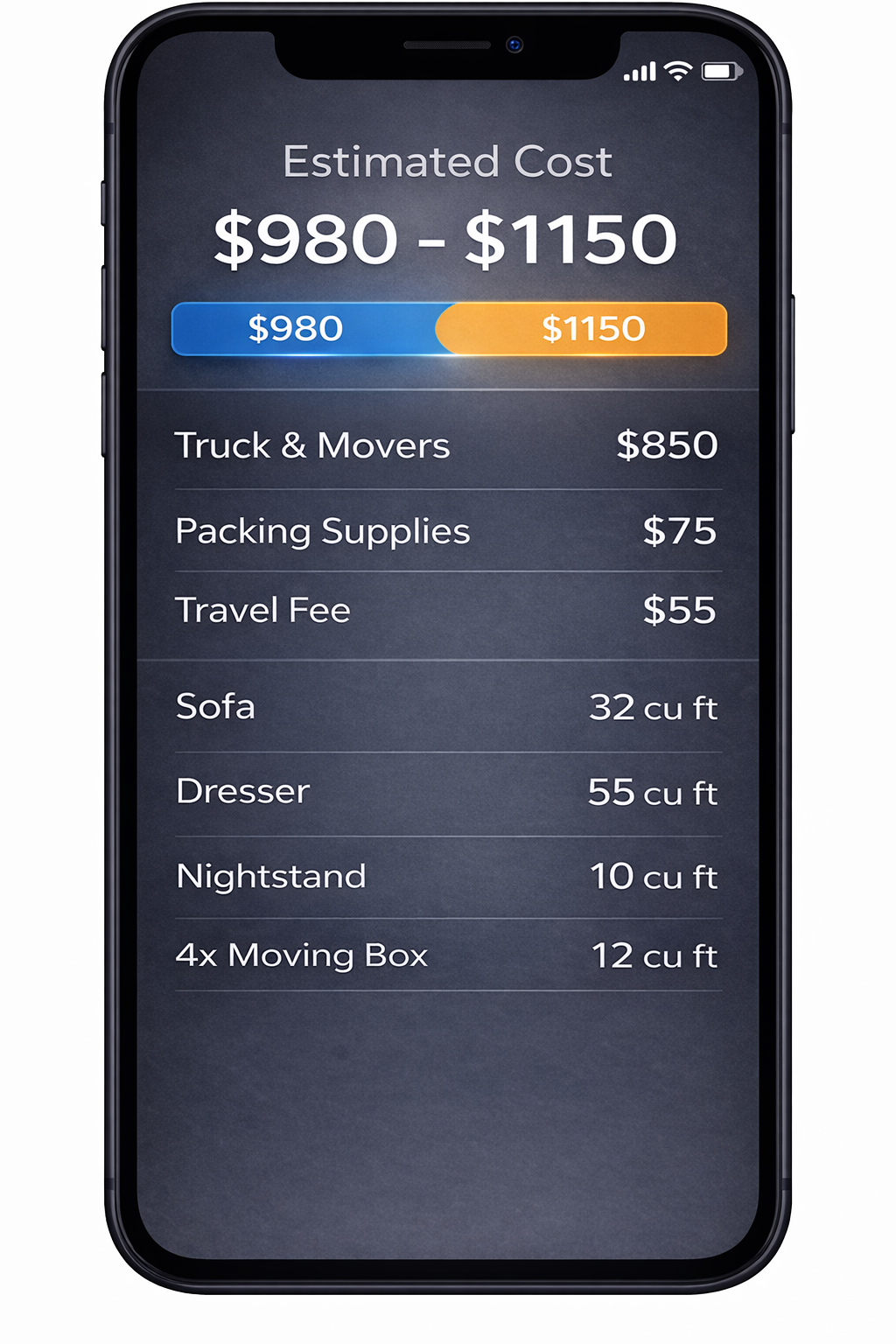
2. AI Detects Your Items
We identify your items and calculate volume for a clearer estimate.
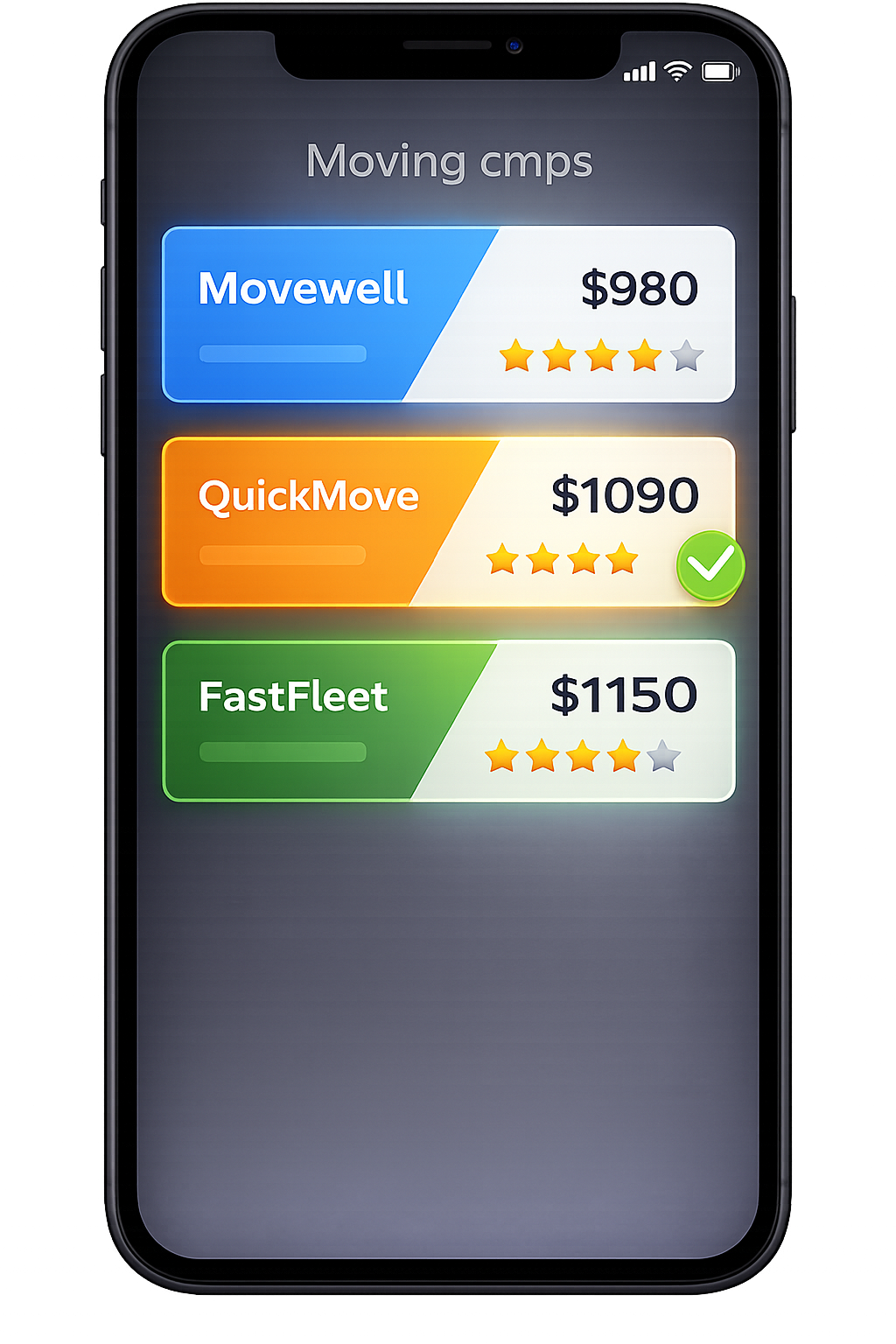
3. Compare Multiple Quotes
Compare mover quotes for New York, NY from the same scanned inventory.
Frequently Asked Questions
How much does a typical 1-bedroom move cost within New York City?
Many 1-bedroom moves in New York City end up somewhere in the mid-hundreds to low-thousands range, but the spread is wide. Walk-ups, elevator waits, tight parking, and how fully furnished you are all change the price. A lightly furnished one-bedroom with a good service elevator and easy parking will be on the lower end; a fully loaded fifth-floor walk-up on a busy block will be higher. Instead of relying on generic averages, MoveCost lets you scan your apartment with AI, build an inventory, and compare real quotes tailored to your exact New York move.
Why do moving quotes in New York vary so much between companies?
Quotes vary because different New York movers make different assumptions about your building, traffic, and how long your job will take. One mover might assume a clear loading zone in front of your building, while another expects to park around the corner and factor in extra walking time. Some include basic packing or materials, others charge separately. With MoveCost, every mover sees the same AI-generated inventory and the same building details (stairs, elevator, parking, move-in rules), which usually narrows the price range and makes comparisons more meaningful.
Do movers in New York charge extra for walk-ups and no elevator?
Walk-ups and buildings without elevators almost always influence moving cost in New York, even if you don’t see a separate “walk-up fee” on your quote. Carrying items up or down multiple flights adds time and effort, especially with heavy furniture and boxes. Some movers explicitly list stair surcharges after a certain floor; others simply build the extra time into their hourly estimate. When you use MoveCost, you can clearly indicate your floor and whether you have an elevator so movers price your New York walk-up honestly from the start.
How can I avoid surprise charges on moving day in NYC?
To reduce surprise charges on New York moving day, be as detailed as possible before you book. Call out tight stairwells, long hallways, if trucks can’t park near your building, required COIs, and any move-in/move-out time windows your co-op or condo enforces. Don’t forget unusually heavy or delicate items like pianos, exercise equipment, or stone furniture. MoveCost’s AI scan helps you capture what you own, and our prompts walk you through common NYC issues—elevators, loading docks, parking, and building rules—so movers can include those factors in their original estimate instead of adding them later.
Is it cheaper to move on a weekday instead of a weekend in New York?
Often, yes. In New York, weekends and the first and last few days of each month are in high demand, especially in rental-heavy neighborhoods and areas with student housing. Rates can be higher or availability tighter during those times. Midweek moves in the middle of the month are usually more flexible and sometimes cheaper. However, some New York co-op and condo buildings only allow moves on weekdays during business hours, which can limit your choices. With MoveCost, you can test different dates and instantly see how your New York moving company cost changes before you commit.
Can I use MoveCost for both local NYC moves and long-distance moves from New York?
Yes. MoveCost works for local moves within New York City as well as regional and long-distance moves starting in New York. You scan your home once with AI, then enter your origin and destination addresses—whether you’re going from Brooklyn to Queens, Manhattan to Westchester, or New York to another state. Movers then use the same detailed inventory and building information to generate quotes tailored to your specific route and building conditions at both ends.